
Culture and Ideas
-

How Muslim Women Can Save Indian Secularism
|
Muslim Women have occupied a peculiar position in the mainstream Indian imagination. Through their (inaccurate) perception as a homogenous category, Indian Muslim Women have invoked either imagery of communal normativity through the visible invisibility of the black burqa within the public sphere, or fetishized as mysterious suffering figures who need saving. Beyond these narrative constructions,…
-

Artificial Intelligence: Implications for human dignity and governance
|
Nayef Al-Rodhan Recent years have seen a surge in discussions about the impacts of artificial intelligence (AI). These debates have predominantly featured issues related to autonomy in driverless cars, or the moral dilemmas of deploying ‘killer robots’, though the reach and impact of AI-based technologies is, of course, far more widespread. AI is a widely…
-

Caliberating the moral contours of Indian religious freedom
|
On 27th November 2020, the Governor of the Indian state of Uttar Pradesh promulgated an anti-religious-conversion ordinance. This ordinance prohibits all unlawful conversions from one religion to another which take place by employment of any one or more than one of the following methods – misrepresentation, force, undue influence, allurement or by any fraudulent means…
-

Why Slogans Like “I Will Never Understand, But I Stand” Undermine the Fight for Racial Equality
|
At least since Ancient Greece, humans have recognized that they are not always rational. One of the major legacies of the Ancient Greek intellectual tradition (most famously articulated in Aristotle’s Rhetoric) is the three-layered theory of persuasion: logos–pathos–ethos. In this school of thought, reason (logos) was only one of three–often equally important–modes of human persuasion, alongside with credibility…
-

The Problem of Facial (Mis)Recognition
|
In the past five years, facial recognition systems have frequently misrecognised the faces of minority groups. For instance, Amazon’s Rekognition API, during an experiment, failed to recognize 11 persons-of-colour who are members of US Congress, and misidentified them with criminal mug shots[1]. It does not stop there, with multiple instances reported around the world of…
-

David Graeber (1961-2020): a take on his legacy as challenger of political common sense
|
Beginning of this month, David Graeber, a thinker fitting many labels, passed away. “It might be said that all my work has been exploring the relation between anthropology as an intellectual pursuit, and practical attempts to create a free society, free, at least of capitalism, patriarchy, and coercive state bureaucracies”. These words highlight the dualism…
-
Restitution of Conjugal Rights: An Anathema to Human Rights
|
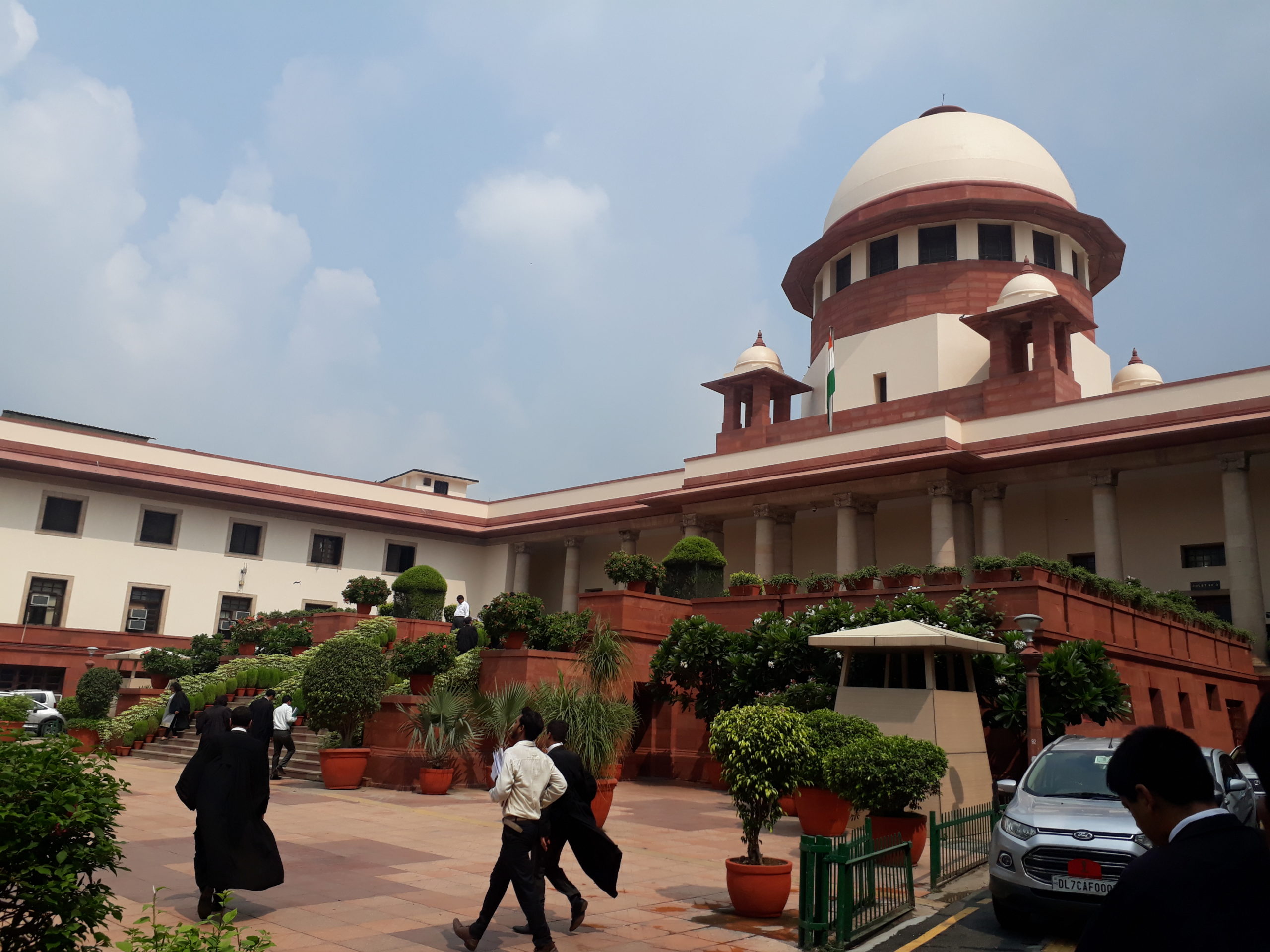
In March 2019, the Honourable Supreme Court of India admitted a writ petition[1] (Ojaswa Pathak v. Union of India) challenging the constitutionality of the remedy of restitution of conjugal rights present under multiple family laws including Section 9 of Hindu Marriage Act, 1955 (hereafter the Act). The question of law i.e. constitutionality of the remedy…
-

Liberal Theory’s Neglect of Environmentalism
|
It is no exaggeration to say that climate change is the most pressing issue facing the world today. This is a strong claim to make, but the scientific evidence is more or less incontrovertible.[1] Barring the emergence of an imminent nuclear war, an alien invasion, or a deadly coronavirus mutation, climate change will remain the…
-

Uncovering patriarchal undercurrents in the quest for the ‘genuine rape victim’: A feminist legal theory narrative of the gendered perceptions on consent.
|
Status of Indian rape laws: The harsh statistics The persistent growth of sexual atrocities in India has led to the formulation of seemingly uncompromising rape laws. However, increasing number of rapes and decreasing conviction rates paint a contrary picture regarding the efficacy of current rape law. In 2001 16,075 rape cases were reported, which more…
-

The Lorax and Legal Standing
|
The year before publication of Christopher Stone’s seminal article ‘Should Trees have Standing?’ in the Southern California Law Review, another American environmentalist made an important, if overlooked, contribution to the debate on public interest litigation. “I am the Lorax…I speak for the trees, for the trees have no tongues.” Apart from a recent US Court…