
The Chalet des Anglais, located in a French foothill of Mont Blanc massif, has long been isolated from the modern ways of life. When the son of the owner became a fellow at Balliol College, Oxford in 1896, the ‘Chalet of the English’ became a hub for what young Oxford men euphemistically called ‘reading parties’. Friendly, and certainly homoerotic, these parties were retreats from modernity comprised of Alpine hikes, fireside chats, and Turkish baths.
Reading parties at the Chalet reflected how European elites at the turn of the twentieth century spent their summers. Amid yachting, hunting, birdwatching and other leisurely pursuits, affairs of state gave way to the gentleman’s reconnection with nature. War – particularly the sort of continental conflict which hadn’t occurred since Napoleon – seemed a remote possibility to Europe’s ruling classes. These included effortlessly superior Balliol men who ended up on both sides of the Great War: Prime Minister Herbert Asquith, Foreign Secretary Edward Grey, and even the son of the German Reich Chancellor Theobald von Bethmann-Hollweg, who matriculated to Balliol in 1908. Although Theobald was not an optimistic man and believed that his family estate in Brandenburg would come under Russian occupation, the fact that his oldest son was sent to Oxford suggests that he did not anticipate a world war, and certainly not one where Berlin and London would fight head-on.
Yet the reading parties reveal much about how total war returned to a patriarchal Europe. The July Crisis, the series of diplomatic incidents which culminated in the outbreak of the First World War in August 1914, reflected a ‘July crisis’ of a different sort: the self-doubts of masculinity wracking Europe’s elites. Beneath the facade of the refined gentlemen of the early 1900s, there lay widespread concerns of the alleged loss of ‘real’ manhood. Indeed, clues of a masculinity crisis across the European empires were ubiquitous. Over the course of colonial clashes and nationalist uprisings, the ‘enlightened’ gentlemen came to believe that a real man should not enjoy one another’s company in nature, but rather to enjoy conflict and demonstrate dominance over others. Danger associated with great-power war was not to be avoided, but to be courted. A man of courage, it was thought, would never back down – even amid when destruction of what he cherishes appeared imminent.
The line between opposing gender roles inherited by the protagonists of the July Crisis became so obfuscated that being a man no longer conveyed privilege with certainty. In retrospect, these men were not caricatured villains. They craved companionship and feared isolation, simultaneously defined by their honourable birth as well as the decreasing social relevance of nobility. Just like young men today, they were struggling with a world where masculinity and manhood were linked with both the capacity for violence and the appreciation of nature, knowledge, and collective empowerment. Titles still made them special, but they no longer demanded social veneration. The noble men, in other words, became ‘soft’ both by choice and by chance. These men, who for so long worried about broken ties and collapsing relationships, were not destined for war.
The June 1914 murder of the Austro-Hungarian Archduke, Franz Ferdinand, in the Bosnian capital of Sarajevo was a shocking event with no automatic linkage to the continental conflict it would ignite. Political violence in the form of assassination was not unexpected, having claimed since 1898 the lives of an Austrian empress, an American president, and a Serbian king. None of these murders, though terrible, led to a great war. The Archduke had also cautioned against aggressive diplomatic manoeuvres by Austria Hungary. The Concert of Europe, the concord of great powers that until then had avoided total war since the end of the Napoleonic Wars in 1815, could have been expected to restrain the impulses to war.
These impulses remained under the surface of twentieth-century European geopolitics. Each peaceful resolution of a colonial or continental crisis preceding July 1914 amounted to self-doubts of masculinity. How could honourable men capitulate without a fight? Confronting and even courting danger, many of Europe’s leaders thought, was the only path to ‘real’ manhood.
A Man’s Word Is His Bond
General Franz Conrad von Hötzendorf became the Austrian army’s Chief of Staff in 1906, amid personal tragedy. A year after his wife died tragically, leaving him depressed. In 1907, however, he found himself at a dinner party, seated at next to a woman whom he had met 28 years earlier, Virginia von Reininghaus, an Italian aristocrat. Though she was married to a Viennese industrialist and the mother of six children, Conrad fell head over heels in love.
Their correspondence – which included three-thousand letters of his that were found unsent and compiled posthumously as the Diary of My Sufferings – were a mix of romance and commentary on Austro-Hungarian geopolitics. Conrad’s fragile masculinity was intertwined in both. He wrote to his beloved ‘Gina’ daily and developed an idea of crushing Serbia, not necessarily for the sake of advancing Austro-Hungarian imperial interests, but to earn her love by returning from the battlefield ‘crowned with glory’. And a man’s word is his bond: in government, he was a staunch advocate of pre-emptive war against Serbia, especially after it protested Austria-Hungary’s annexation of Bosnia-Herzegovina from the Ottoman Empire in 1908. That belligerence made Conrad an outlier, and in 1911 Conrad clashed with the foreign minister and was dismissed. It was only until December 1912 that he would return to his post thanks to a powerful friend who promised to restrain his aggressive impulse. That friend was the heir apparent to the throne, Archduke Franz Ferdinand.
The aftermath Ferdinand’s assassination by a Serbian nationalist left Conrad seething: Having been denied the opportunity to punish Serbia in 1909, he wrote to his beloved Gina that it was a ‘crime’. Conrad was not the only European leader who sought to prove himself to a woman during the crises leading up to 1914. Having been accused of indecisiveness during the Balkan Wars (in 1912 and 1913), Austrian foreign minister Leopold Berchtold was determined to act tough. Berchtold’s wife recalled that he repeatedly woke up in the middle of the night to add harsher terms to the document.
In the pursuit of firmness, Austria-Hungary was brought by these men into its own destruction. The only voice of reason came from Tisza Istvan, the Hungarian prime minister, who rightfully predicted that war with Serbia would invite Russian and French involvement. But he was eventually convinced of the war’s necessity by Conrad and Austrian Prime Minister Stürgkh: A ‘policy of hesitation and weakness’, according to Stürgkh, would lead to Germany’s withdrawal from its alliance with Austria-Hungary.
Whilst Austria-Hungary was afraid of looking weak in front of Germany, the reverse was also true. In response to Serbia’s intransigence in response to Austrian demands following the assassination of the Archduke, von Bethmann-Hollweg (whose son was at Balliol) issued the infamous ‘blank cheque’ promising to back Austria to the hilt. He justified his decision not on rational imperial interests but on Germany’s need to avoid Selbstentmannung, or ‘self-castration’.
Like Vienna, Berlin’s psychological need to avoid appearing weak had roots in the crises leading up to Franz Ferdinand’s assassination. Conrad’s counterpart in Berlin, Helmuth von Moltke the Younger, was similarly distraught when the German Reich backed down to French demands during the Agadir crisis of 1911. He lamented to his wife that presiding over an empire too timid to use its army was no better than being placed under a ‘Japanese protectorate’. Von Moltke’s anxiety was compounded by an inferiority complex stemming from his legendary uncle who had beaten every enemy of German unification. Even the Emperor was afraid of cowardice. Wilhelm II, whom a leading conservative newspaper in Germany derided as ‘Guillaume le Timide’, was now ruling a ‘race of women, ruled by the interests of a few racially alien merchants.’
Finding a Reason to Fight
The news of Ferdinand’s assassination reached Saint Petersburg as the French president, Raymond Poincaré, was finishing his visit. Convinced that Germany was a bully who only reacted to force, he was determined to resist the Central Powers alongside France’s Russian ally. Russia had ordered a full mobilisation, assuming that it had France’s full support. Haunted by the memories of France’s defeat at the hands of Prussia in 1870, Poincaré made a desperate attempt to signal France’s commitment to peace upon his return to Paris. But when a German ultimatum arrived with demands of French capitulation, Poincaré felt he had no choice but to stand firm and fight.
Over the week following Poincaré’s refusal, the German army moved swiftly into Belgium to invade France from the north. Germany pummelled Belgium with artillery shells and summarily executed thousands of Belgian civilians. These killings provided the perfect casus belli to drag the United Kingdom – which had promised to protect Belgian neutrality – into a fight to stop what was widely called a ‘rape’. The heroic connotations of this gendered narrative aside, it also suggests the same masculinity unable to restrain itself in Austria-Hungary and Germany was present in Britain. After the war in 1933, King George V admitted to having pressured Foreign Secretary Grey into war. Amid the political crisis in Ireland, Grey could not find a reason why the British Empire should commit itself to a Europe-wide conflict. ‘You have got to find a reason Grey’, urged His Majesty. After delivering a rousing pro-war speech to Parliament, Grey returned to his office, slammed his fists on the table and cried: ‘I hate war, I hate war.’ He later lamented that ‘the lamps are going out all over Europe, we shall not see them lit again in our life-time.’
The fate of empires was inextricably tied to the masculinity of their leaders. A continent which had once congratulated itself for its modern institutions now practiced a different style of international politics: one that focused not only on strength and material power but also on one that was focused on personal status and personal relations. When dominance was a primary definition of masculinity, the restraint that could have prevented catastrophe became unthinkable.
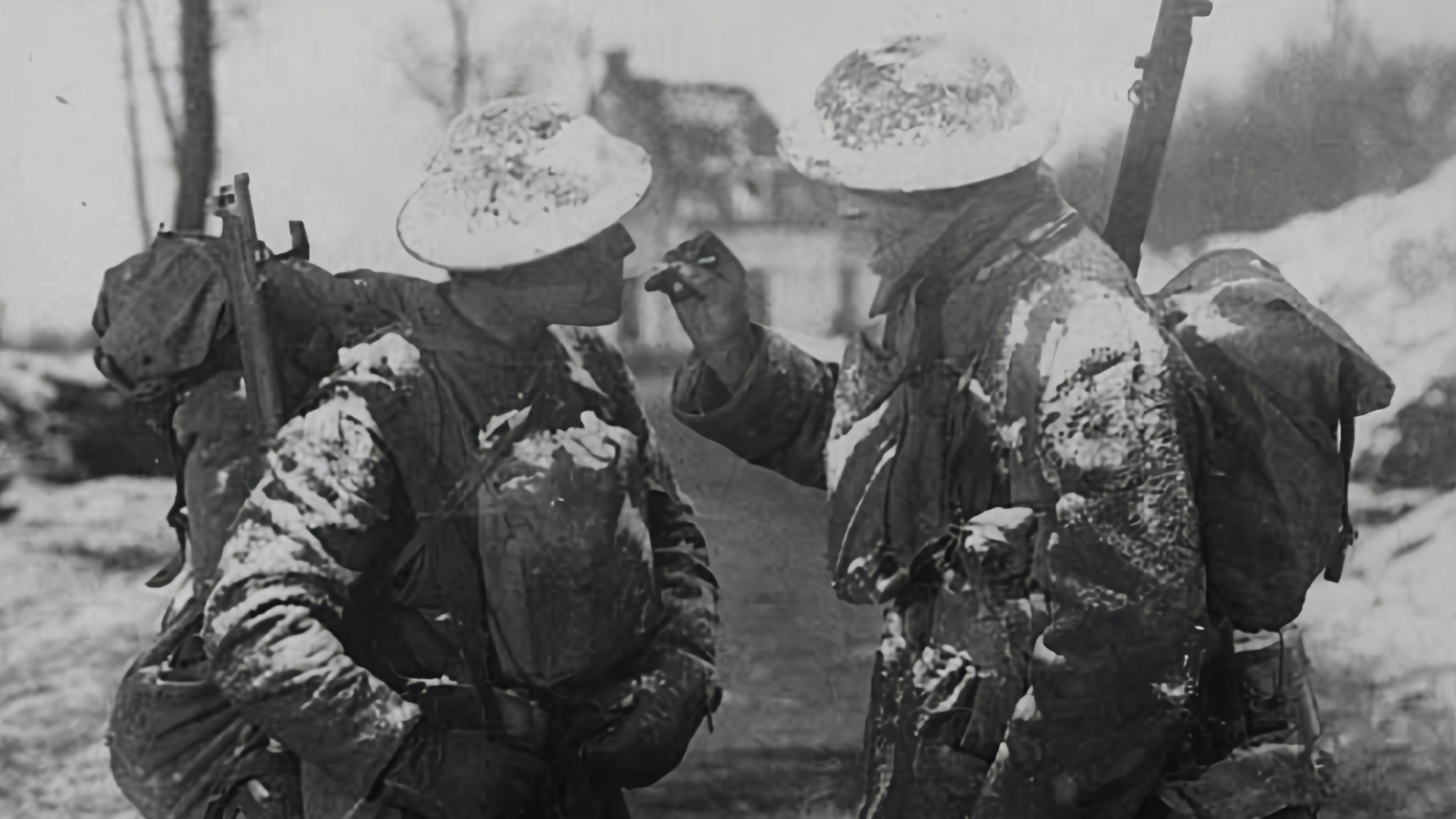
War propelled the ‘soft’ men of Balliol and the Chalet reading parties to the front. Having graduated only months before, Harold Macmillan volunteered as soon as war was declared. Injured in the Battle of the Somme in 1916, he feigned death in a mortar hole for twelve hours and read from a pocket copy of Prometheus Bound to stay calm. He became prime minister in 1957. Grey also survived the war, becoming British Ambassador to the United States. But more than two hundred of their fellow Balliol men did not. Raymond Asquith, the son of then–prime minister, was shot dead by German troops at the Somme. The son of Reich Chancellor von Bethmann-Hollweg, Friedrich died on the Eastern Front in 1915, the year Conrad married Gina.
Trigger Happy
No leader today was alive during the First World War, and few saw any of the Second. Yet today there is a return of great-power competition informed by an alleged decline of masculinity in both the West and the East. The fear of leading an emasculated generation of young men incapable of withstanding the clashes of civilizations has taken over the world’s leading great powers. A world of frustrations, of contradictions, and of hope: the hope that a major-power conflict can settle the questions of who dominates whom. Young men – and, increasingly, women – yearn for a war that can stop them from wondering who they are.
But will war settle the question? As the German Empire crumbled in 1918, Wilhelm’s advisors suggested that he should die like a real man in a cavalry charge. The Kaiser promptly rejected the suggestion and fled to the Netherlands. He died in 1941 during the Nazi occupation. He lived his last days in relative obscurity, witnessing another world war that many nationalists still glamorise today – witness Russia’s annual victory-day parades.
Compared to the feel-good story of saving the world from Hitler, the July Crisis of 1914 was messy, undignified, and unsexy. We search for Hitlers in the present tense because we have convinced ourselves that only evil makes war happen. But this search misses the point. Evil still exists, but a stronger force that propelled great powers to war in 1914 was precisely the collective attempt to make themselves manly again when masculinity itself had become fragile. No great power today wants war, but none of them has the courage to imagine an alternative. This urge of destruction that turned off the lamps could not have lived without the ruinous hubris of the powerful. It has returned, and there is a real danger it is not recognised
The words of US diplomat George Kennan in his 1946 ‘Long Telegram’ feel apt: we have lost the ‘courage and self-confidence to cling to our own methods and conceptions of human society.’ The price of this failure ‘is that we shall allow ourselves to become like those with whom we are coping.’ What follows, then, is darkness.
Haitong Du is a DPhil student in International Relations at Balliol College, Oxford.
Work Consulted:
- Margaret Macmillan. The War that Ended Peace: The Road to 1914.
- Christopher Clark. The Sleepwalkers: How Europe Went to War in 1914.
- Annika Mombauer. The Origins of the First World War: Controversies and Consensus.
- The Chalet Book. Balliol College Archives.
- Eric Hobsbawm. The Age of Extremes: The Short Twentieth Century, 1914–1991.