
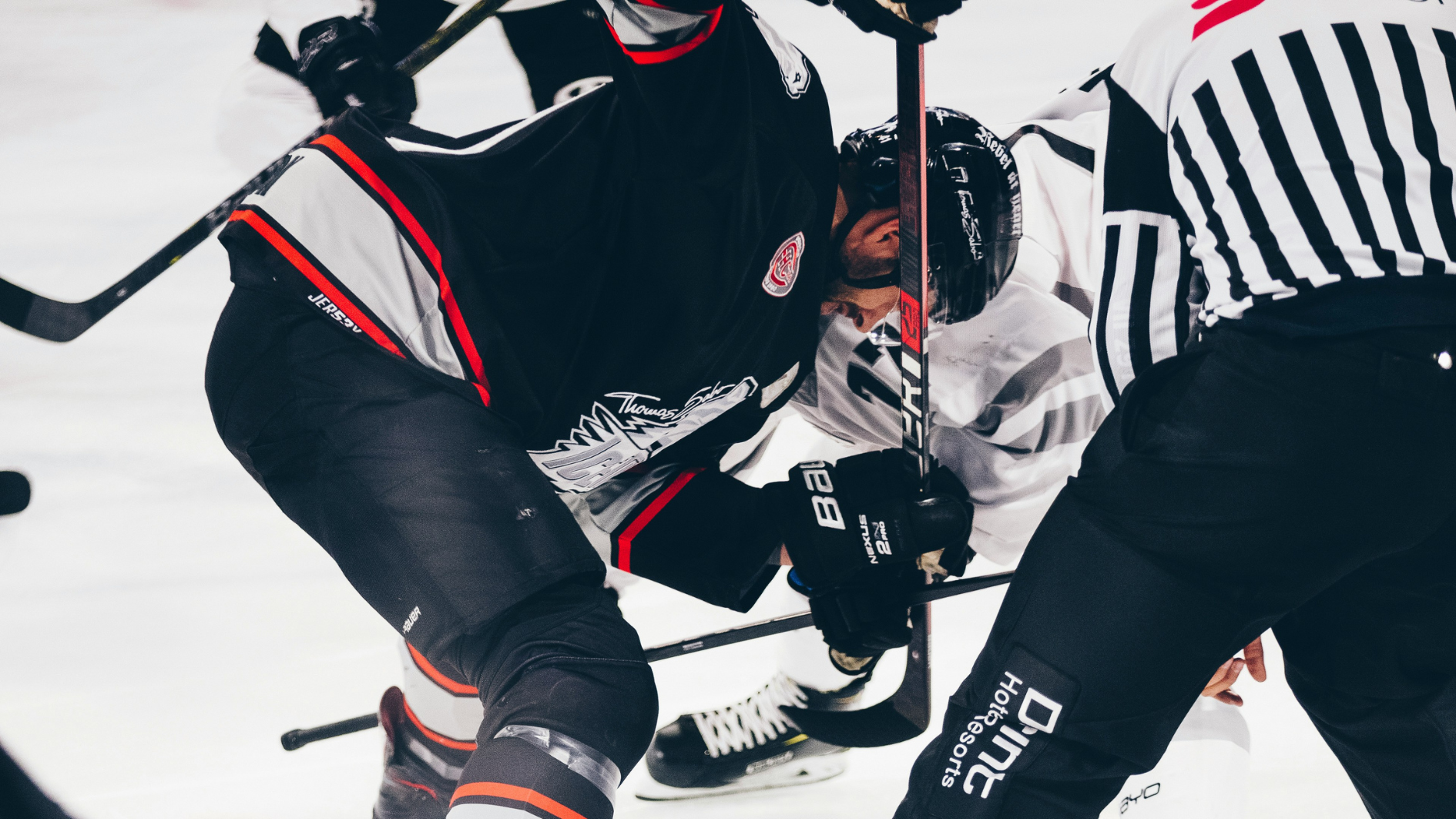
In early 2026, a melodrama produced on a modest budget by a little-known Canadian company broke the internet. It acquired a global following almost overnight, thanks to fans helping it go viral on social media with a fervour that stunned industry executives. The show’s previously unknown lead actors became overnight pop-culture sensations and were soon invited to star in music videos and mobbed at public appearances such as the Golden Globes.
The show’s subject matter is unambiguously masculine, set in the world of professional ice hockey where physical dominance and the brutal competitiveness of elite sport are highlighted. But that was not what made the show such an instant hit. The masculinity featured on screen was fierce, high-stakes – and achingly, unapologetically tender. For the two men at the centre of it all, the tension between them that gripped audiences was not about who would win, but who would break first; who would admit, despite everything, that he needed the other. At its core, Heated Rivalry is a love story; specifically, it is a story of ‘Boys’ Love.’
While the show might be considered a trailblazer in the West, none of this reception was surprising to anyone familiar with East and Southeast Asian popular culture. This masculinity is what ‘Boys’ Love’, or BL, has been modelling for decades. Originating in Japanese manga in the 1970s before spreading across Thailand, South Korea, and China in the 2000s, BL content now constitutes a thriving multibillion-dollar industry, a network of platforms and creators entirely centred on love stories between men.
But why is BL so popular? It allows for a particular form of masculinity, one which presents men as emotionally transparent and possessing the right to softness without forfeiting strength. In presenting emotional intimacy and mutual, reciprocated care as desirable masculine qualities rather than weaknesses, BL tells its audience that there is power in men making emotional realisations; it suggests that proof of manhood can lie as much in a capacity to love and be loved as a capacity to dominate.
This framing provides a sharp contrast against the strict gender norms that still structure much of East and Southeast Asian social life. Confucian-influenced expectations position men as stoic providers and women as self‑sacrificing caregivers, with both roles policed through family and institutional structures such as school and work. BL men, by contrast, are allowed to be beautiful, emotionally expressive, and sometimes even domestically oriented without losing their status as ‘proper’ men, while women step more into the role of spectator and organiser. Within the configuration BL proposes, the ideal is not the man who keeps his feelings under lock and key, but the one who can be changed by another person and say so out loud. This puts emotional distance at a distinct disadvantage: for cultures where men are still told to endure hardship in silence and women are expected to shoulder a ‘double burden’ of paid work and care while left on the sidelines to endure misogynistic standards, this reallocation of feelings and fantasies unsettles existing gender regimes.
Although BL provides a space for alternate masculinities to become visible and commercially powerful, it did not conjure these alternative masculinities out of thin air. Japanese BL has its roots in the shōjo manga genre in the 1970s, itself deeply informed by earlier traditions of homosocial and homoerotic male bonds in East Asian literary and visual culture. What is new is not the idea that men might love men, or that they might be emotionally developed, but the decision to make that configuration of masculinity the centre of a genre and to build an industry around it, posing a bold and overt challenge to the idea that masculine models of power require hard-hitting domination over others.
For all its positive impact on male representation, the genre has not gone without complications. The traditional seme/uke (top/bottom) dynamic, which traces back to early Japanese yaoi manga, can risk reproducing hierarchies which gender one partner as more effeminate and submissive, raising questions about whether it subverts or merely relocates conventional gender roles. To address this, newer BL has become increasingly diversified in its offerings of romantic dynamics and expressions that explicitly resist a feminised-masculinised split. For example, the Thai hit Bad Buddy deliberately refused to portray a fixed top/bottom dynamic between its leads, self-consciously disrupting stereotypes by staging relationships in which these gendered hierarchies are negotiable or otherwise irrelevant.
Crucially, throughout the genre’s history, women have been the target audience of BL media. Japanese scholar Akiko Mizoguchi described it as a space women built for themselves, from the fujoshi and funü communities of Japan and China respectively, to international fans discovering these series online. This overwhelmingly female audience has raised its own set of ethical debates. Some critics argue that BL objectifies gay and bisexual men, flattening or distorting actual queer experiences into a playground for women’s fantasies. Gay men themselves are divided on whether BL feels like recognition, misrepresentation, fetishisation, or something in between. But this audience is not a monolith. Many BL consumers are queer themselves, and as Mizoguchi and others have pointed out, BL offers a more equal position in a media landscape where women are routinely positioned as objects rather than subjects of desire.
The effects of this shift extend to state regulation and censorship of BL media, particularly in China. While regulators have officially framed censorship as a concern about obscenity or queer representation, scholars such as TingTing Hu and Liang Ge argue that controlling BL is part of a broader ideological project. Their work describes how Chinese officials consider the ‘crisis of masculinity’ created by BL a problem to be solved in order to uphold hetero-patriarchial systems of power. But BL has also helped foster nonconforming female groups of women who, having encountered a masculinity built not on dominance or authority, have become less willing to inhabit the subordinate roles that patriarchal institutions require of them. Hence, outside of producing an alternative masculinity, BL also threatens to produce an alternative femininity: one with its own desiring gaze, collective networks, and blatant refusal of the gender order, one dangerous and powerful enough for the state to continuously suppress.
Indeed, Chinese BL adaptations have learned to survive particularly well despite this increasing suppression. Although queer storylines have been banned from Chinese broadcast television since 2016, blockbuster productions based on BL source material such as Guardian, The Untamed, and Word of Honour have had to develop an entire vocabulary of concealment to survive. Each drama adapted the strategy of depicting homosexual romance under the guise of ostensibly platonic male friendships to pass censors and reach mainstream audiences. As the term ‘bromance’ became an iconic feature of translated plot summaries, scriptwriters embedded longing glances in scenes that might originally have featured intimacy alongside references to the Chinese deity of homosexual love, traditional wedding rites, androgynous styling, and marriage symbolism. These hidden messages are so dense that fan communities often spend months cataloguing them, creating a form of cultural resistance conducted entirely in subtext. In spite of – or perhaps, because of – these constraints, these shows skyrocketed in viewership; for example, The Untamed has more than 10 billion views on streaming platform Weibo.
This explosive popularity is mirrored throughout the BL market in Asia. By the mid‑2010s, the domestic BL market in Japan alone was estimated at roughly US$190 million, spread across a range of products, from manga and light novels to anime and live‑action dramas. Since then, Thai, Korean, Taiwanese, and Chinese BL have become export engines, generating millions of streams, fan events, tourism, and brand sponsorships that rival or even surpass mainstream celebrity culture. Meanwhile, the West has spent centuries universalising a particular model of masculine dominance, one which is unemotional and unassailable and punishing softness as weak, only for the global marketplace to become increasingly captivated by this alternate model of masculinity.
Heated Rivalry is not the West’s first brush with this kind of story. Films and series like Red, White & Royal Blue and Heartstopper have made significant strides in normalising male-male romance for Western audiences, through the settings of royal young-adult fantasy or pastel school corridors. Those gentler, wholesome portrayals are equally important in bringing queer representation to diverse and in particular age-appropriate audiences; yet online discourse has persistently pitted these interpretations of queerness against one another. For example, Heartstopper’s creator has publicly refused to associate her work with the BL genre – a reminder that not all queer narratives, especially those produced in the West, are comfortable with the specific kind of reputation that BL has cultivated. But while there is nothing inherently lesser about a softer vision of queer masculinity, Heated Rivalry captures a significant and overt message: these dynamics can emerge from, and even intensify, traditional forms and settings of masculinity which remain unabashedly strong.
The divergence of Heated Rivalry from its predecessors both Eastern and Western is, therefore, particularly interesting. What makes East Asian BL so threatening is how it carves out space for an androgynous and effeminate masculinity which deliberately contrasts dominant East Asian masculine ideals. Heated Rivalry, on the other hand, was released at the very moment the manosphere promised a return to the traditional Western ideal of masculinity, entering a cultural zeitgeist that overwhelmingly suppresses everything it defines as weak. Yet the show refuses to offer an aesthetically softer or feminised alternative to masculine dominance. The main couple, Shane and Ilya, are both elite professional athletes locked in years of fierce competition across the ice. Their relationship unfolds under the specific pressures of a hyper-masculine world that has no framework for what they are to each other – the same world the manosphere claims as its natural habitat. And yet, the romance that develops between them emerges through a dynamic which conveys that strength and vulnerability are not opposites: a man can be both formidable and emotionally articulate, competitive, and capable of need, without one quality cancelling out the other. By making their ability to unguard and open up the real stakes of the story, Heated Rivalry subverts the manosphere’s central premise: it keeps the hypermasculine exterior the Western manosphere idolises – the athlete’s body, the competitive drive, the stoic public face – and insists that this form, too, can carry tenderness. It does not ask its audience to accept a softer man, but rather to accept that the hard man has an interior life.
‘Might makes right’ is a claim not only about physical force, but about who gets to define what counts as strength by controlling the cultural narrative of what a man is supposed to be. BL’s intervention may not be military or political, but it is undoubtedly a form of power: the power to capture desire at scale, to make millions of people feel something they weren’t supposed to feel, and to make that feeling profitable enough that no streaming platform, no state censor, and no manosphere podcast can fully contain it. As a phenomenon that has actively resisted suppression time and time again, BL achieved its economic and cultural prominence through proving that masculinity is a live, multidimensional construct that cannot be limited to societally enforced attributes. Throughout East and Southeast Asia, its success has already unsettled rigid gender roles, both through offering men new models of expressiveness and nurturing a collective power in women that state and family alike struggle to control.
Now that these tropes are gaining popularity in the West, it is up to audiences to decide how far that redefinition will go, and how much of the old masculine hegemony – in East and West alike – they are willing to let Boys’ Love threaten. BL’s female-dominated audience and the manosphere’s male-dominated one risk producing more cultural fracture than negotiation, with diverging audiences consuming increasingly incompatible visions of masculinity that have little crossover between them. Such a divide would limit BL’s might to those already disposed to receive its messages. Shows like Heated Rivalry now seek to bridge that gap, attempting to prove these visions are not in competition with one another. Instead, men can be ambitious, aggressive, even violent in the arenas that demand it – and still be expected to talk about their feelings when they get home.
Ellie Yau studies human sciences at St Hugh’s College, Oxford. She has watched all the shows mentioned in this article and would wholeheartedly recommend them to anyone reading this.