
Two images open Alexander Stubb’s new book, The Triangle of Power: Rebalancing the New World Order (2026). The first comes from February 2022. From his home in Espoo, hours from the Russian border, Stubb, the Finnish president, texts Foreign Minister Sergey Lavrov: ‘Please, please stop this madness.’ Lavrov parries with the usual tropes. After six messages, Stubb gives up. The second image fast-forwards three years. Stubb is on the first tee of the Trump International Golf Club in Florida, with South Carolina senator Lindsey Graham, former professional golfer Gary Player and Donald Trump, making a case for Ukraine over seven hours of low-stakes diplomacy. One scene is right without might; the other is might without right.
Between these images sits the question Elaine Brown once put to her comrades upon assuming command of the Black Panther Party: ‘I have all the guns and all the money. I can withstand challenge from without and from within. Am I right, comrade?’ Contrasting the utopian aims of the Party with the need for the means to achieve them, Brown’s pronouncement could be read as the thesis statement of our decade. The Triangle of Power – delivered by a sitting head of state who has spent the past two years trying to make the liberal international order answer back – reads like a response to it.
Stubb writes from an unusual vantage. Since obtaining a doctorate from the London School of Economics, he has had a stint directing the School of Transnational Governance at the European University Institute, ministerial portfolios from foreign affairs to finance, and since March 2024 the presidency of Finland. He is the rare author who can cite Graham Allison on the Thucydides’s Trap – the prospect of war facing the United States as reining hegemon and China as the rising challenger – and then describe negotiating with its protagonists. The book is short, lucid, and – for all its willed optimism – deeply shadowed by what it is trying to hold off.
The diagnosis is by now consensus among what one might call the liberal-lament school: writers as various as Anne Applebaum, Mark Leonard, and Ivan Krastev have converged on the view that the rules-based order is unravelling. Stubb’s contribution is geometric. The emerging system, he argues, is structured by a Triangle of Power: a Global West led by the United States and the G7, a Global East anchored by China and Russia, and a populous, underrepresented Global South that will decide which way the pendulum swings. The historical fork he insists on – and the more original move in the book – is between Yalta and Helsinki. The 1945 Yalta Conference embodies the idea of multipolarity: great powers carving up spheres of influence over the heads of small states. Helsinki, the site of the 1975 Conference on Security and Co-Operation in Europe (CSCE) summit, is multilateralism: rules and norms binding on all, irrespective of size. The present danger, in Stubb’s reading, is a slide from Helsinki back to Yalta on a three-sided board.
What, then, is Stubb’s position on might and right? He is unambiguously warning against the first, even as he concedes that diplomacy now lives inside it. The phrase ‘might makes right’ appears, tellingly, only once in the book — and its context is revealing. Writing about Western sanctions policy, Stubb cautions that ‘imposing sanctions without grounding in international law means enshrining the principle that might makes right. It kills the incentive for anybody else to make shared rules.’ This is the book’s true thesis, smuggled into a technical paragraph: a rules-based order is worth defending not because it constrains adversaries, but because it constrains us. Once the West exempts itself – as Stubb believes it did by invading Iraq in 2003, for example – the game is already lost; the Global South is merely reading the scoreboard.
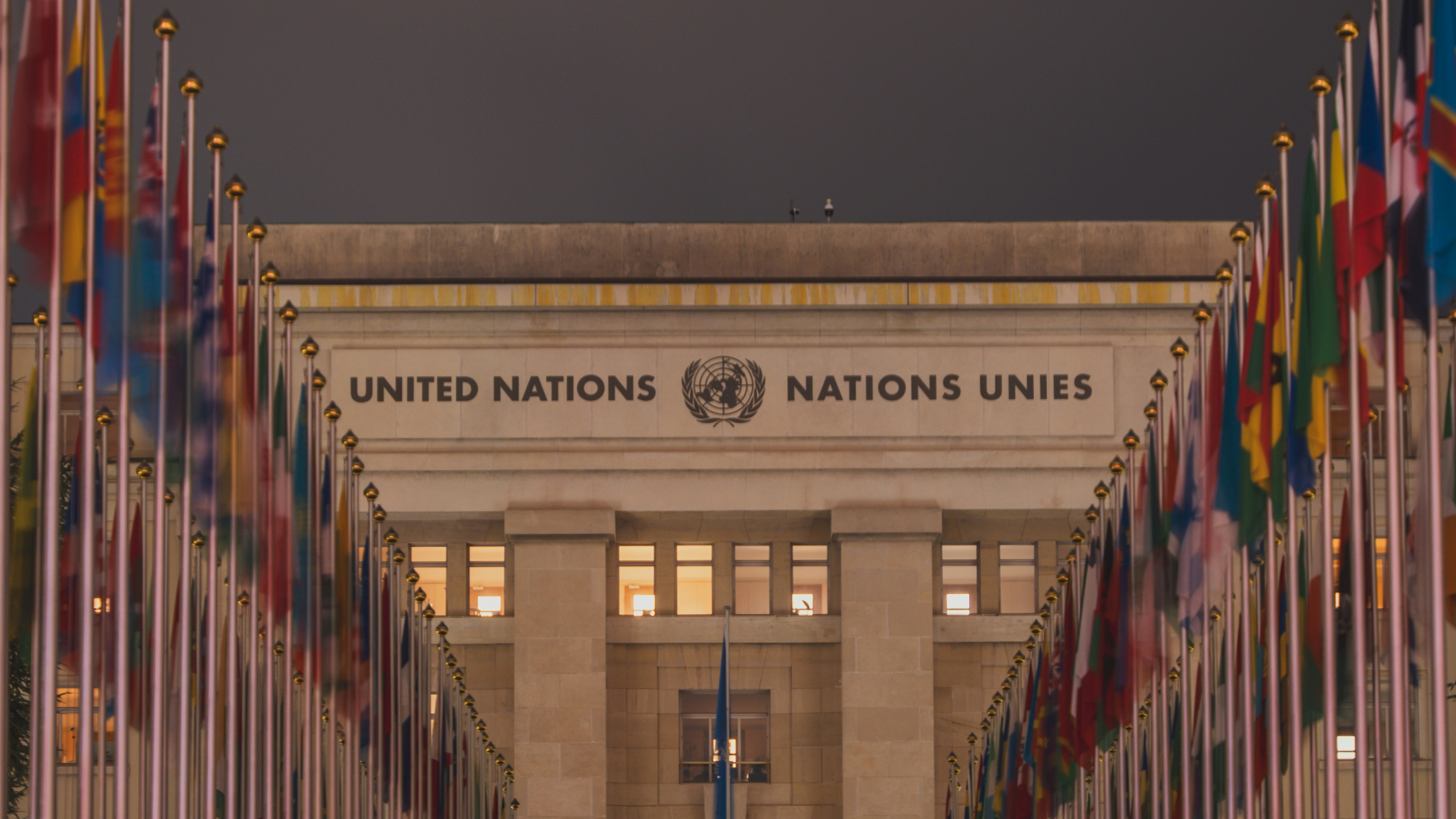
Stubb’s calls for ‘values-based realism’ and a ‘dignified foreign policy’ constitute the book’s prescriptive approach for rebalancing the international order. The first phrase is a compromise formation, and deliberately so: an attempt to reconcile Fukuyama’s end-of-history idealism with Huntingtonian Realpolitik. Liberal democracies should hold to their values without expecting the rest of the world to mimic them; they should lead by example rather than exhortation; they should stop lecturing and start listening. Practically, Stubb’s most concrete proposal is a reform of the UN Security Council — doubling the permanent membership to include countries in Latin America, Africa, and Asia, eliminating the veto of the five current permanent members, and suspending voting rights of members who violate the Charter — which he put to the General Assembly in September 2024. He reports that 188 of 193 delegations applauded. The remaining five are the ones who would have to agree.
This is where the book’s nerve begins to fray. Stubb wants to have it both ways: to indict the logic Trump personifies and to play golf with Trump; to insist the West stop exempting itself from its own rules and to have the West lead the rebalancing; to practise dignified foreign policy while admitting that small states like his own must sometimes ‘put some values to one side’. ‘Values-based realism’ does not resolve this contradiction so much as gloss over it in a phrase. Michael Sanfey, reviewing the book for The Irish Times, notes that Stubb’s own blurber Timothy Garton Ash has elsewhere argued there is no longer a coherent geopolitical West for anyone to lead. One might add that there is no Archimedean point from which a sitting president of a NATO member can deliver the searching critique the moment requires.
The deeper frame Stubb gestures towards but does not develop is older than Graham Allison’s update of Thucydides.EH Carr’s The Twenty Years’ Crisis, written in 1939 on the edge of catastrophe, set out the permanent tension between utopia and reality that Stubb is rediscovering under a different name. Carr’s point – lost on generations of realists who read only his first half – was that a sustainable international order requires both might and right: ethics without power is sermon, power without ethics is predation. The failure of the 1919 Versailles Treaty which ended the First World War, he argued, lay in how the League of Nations assumed a universal harmony of interests which did not exist. The failure of pure realist alternative based on balance-of-power logic alone would be to conclude that none could ever be constructed. ‘Values-based realism’ is, at its best, a belated Finnish translation of Carr; at its worst, a brand. The Canadian prime minister Mark Carney has already appropriated it as the ‘Carney Doctrine’.
A second undercurrent is worth naming. Scholars from the Global South – Amitav Acharya prominent among them – have long argued that the ‘rules-based order’ was always a Western slogan more than a neutral architecture: the rules were written by the victors of 1945 and ratified by those who had no alternative. It is to Stubb’s credit that he hears this charge and, unusually for a Western statesman, does not deny it. His proposal to expand the Security Council concedes, in institutional form, what Thucydides’s Melians could not persuade their Athenian visitors: that a system legitimated only by those who already hold its veto will eventually exhaust the consent of everyone else.
What, then, is The Triangle of Power as a political object? It is best read not as scholarship – Stubb dispenses with footnotes, a choice the Acknowledgments frankly defend – but as a manifesto by a scholar-statesman conscious that the window for this argument is closing. Cyril Ramaphosa’s endorsement of the book represents a voice from the Global South among an otherwise Atlanticist chorus. His words are the most interesting blurb on the jacket because they point out that the charge Stubb levels against the West from the inside is one the Global South has been leveling for decades from the outside.
Can the power of ethics still stand against the ethics of power? Stubb’s answer, pared to its bones, is yes, but only if the West finally does what it has refused to do since 1991: share the writing of the rules. The Security Council proposal is a real test case. So is whether Washington under the current administration will allow any rules that constrain it. Stubb admits, hopefully, that it might. Readers sympathetic to him will find a reasoned case for multilateralism made when such cases are unfashionable. Readers less sympathetic will note that the book is blurbed by a firmament of Atlanticist worthies and concludes, as these books tend to, with three manageable proposals and a quotation from a Nobel laureate. Both readings can be true at once.
The deeper unease the book leaves behind is one Stubb cannot quite name without undoing his own project. If rules only hold when the powerful choose to be bound, then the distinction between rules-based and power-based order is, at bottom, a distinction between two kinds of power: one that accepts constraint and one that does not. The liberal international order, on that reading, was never the opposite of might-makes-right so much as the most sophisticated form it has ever taken — a hegemony that paid for its legitimacy in institutions. Stubb’s bet is that this bargain can be renewed on more honest terms, with the Global South at the table and the West listening. It is a bet made, he would be the first to admit, without the guns.
Elaine Brown’s question remains on the table. Stubb’s answer is that being right without guns is worth something — provided one is willing to rewrite the rules so that others can join the argument. Whether that is statesmanship or wishful thinking is, by the author’s own Socratic standard, for the reader to decide.
Shreya Gautam is a Master of Laws student specializing in public law at National Law University Delhi. She is interested in comparative studies of public law systems across jurisdictions, with a particular focus on constitutionalism, international relations, and geopolitics.