
Relational and Atomised: Yu Xie’s Reflection
In 2025 and 2026, the Chinese-born American sociologist Professor Yu Xie delivered a series of lectures at Princeton University and The University of Hong Kong examining ancient, contemporary, and Western traditions that shape Chinese scholars. Xie considers how the Confucian ideal of a relational society – anchored in ethical norms, family ties, and social responsibility – has built these scholars’ intellectual identity and transnational networks, driving them to carry Confucian moral values into global academic communities. Alongside this longevity, he goes on to underline a more complex issue: the tension between intellectual solidarity and social atomisation that arises when this relational model intersects with meritocracy.
In his historical overview, Xie traces the trajectory of meritocratic intuitions in Chinese political thought. He starts with the ancient Qin state’s highly centralised bureaucratic system, under which officials were appointed either according to the emperor’s inclination or enforced uniform standards. Through the transition of the Han’s commandery quota recruitment, this later developed into the imperial examination, a system which selected candidates through rigorous written tests and strict centralized monitoring.
Even after the Cultural Revolution, which brought a Maoist scepticism of technocratic meritocracy as an organising principle of society, the meritocratic legacy has never fully disappeared – institutional practices such as the national college entrance examination, civil service recruitment, and academic promotion rules based on publications, citations, and journal rankings remain deeply rooted in this tradition. These institutions have instilled a constant drive for upward mobility, motivating individuals to strive for advancement within social, political, and academic hierarchies. However, Xie stresses that they have also constantly weakened intellectual solidarity.
Xie’s contention is that meritocratic mechanisms compel scholars to calculate their ‘achievement scores’ with precision, subordinating genuine intellectual inquiry, academic integrity, and cooperative engagement to career advancement. Plagiarism and appropriation of colleagues’ work thus run rampant, making collaboration fraught with risk. These mechanisms also insulate those entering government consultation and policy-making from ethical and critical reflection, pushing them to merely pursue short‑sighted personal rewards.
As young scholars studying Chinese politics, we have experienced firsthand the troubles described by Xie. This article locates the current predicament of Chinese intellectuals in an imbalanced admixture of two ancient traditions – Confucianism and Legalism. We critique the distorted implementations of Confucian meritocratic ideas by referring to the ills of the old and current systems. Meritocracy in China has historically tied scholarly advancement to state‑controlled mechanisms of atomisation, which inadvertently inculcates an ethic of self‑preservation. ‘Zombie scholarship’ emerges when scholars suppress autonomy, risk-taking, and innovative vision to survive within a hostile environment of cut‑throat competition and mutual suspicion, thereby wasting huge resources and budgets. We thus argue that for scholars to demonstrate abilities or fulfil obligations – whether as mediators translating state directives, legitimisers of ideology and soft power, or innovators who push boundaries through new policies, academic excellence, and technological advancement – then the reconstruction of intellectual solidarity will be necessary.
Confucian and Legalist Perspectives on Meritocracy and Solidarity
In order for this solidarity to be realized, a consideration of the 2500-year-old history of the problem is warranted. With the resurgence of scholarly interest in Confucian political thought, meritocracy in China has often been interpreted as bearing a significant Confucian imprint. Confucianism begins with the education of exemplary person (jun zi), emphasising individualised instruction (yin cai shi jiao) to cultivate and select intellectuals of superior quality. It advocates elevating scholars with moral and academic excellence into public office, with the most outstanding expected to enter the highest leadership, establishing social norms and promoting ritual propriety – thus enacting the transformative power of morality within the community.
But more importantly, Confucianism envisions exemplary persons as bound together by solidarity, sustaining shared ethical values. As Confucius (ca. 551 – 479 BCE) stressed, ‘Virtue is not left to stand alone – one who practices it shall have neighbours’ (de bu gu, bi you lin). Moral transformation, in his view, requires collective cooperation and social unity; hence, Confucius taught his disciples to exercise humility, promote diversity in harmony, and engage in reciprocal admonition. Yet in reality, these aspirations were rarely realised in the chaotic context of the Warring States period (ca. 475 – 221 BCE).
On this basis, Legalist thinkers dismissed the fractured Confucian vision as irreparably idealistic. They argued instead that solitude should be embraced and harnessed in the design of meritocratic institutions. Han Feizi (ca. 281 – 233 BCE), for example, contended that the atomisation produced by competition creates ideal conditions for absolute dominance and state strength. In his vision of strong government, atomised intellectuals would remain incapable of challenging the regime, while ruthless officials – focused solely on fulfilling assigned tasks to accumulate merit – would serve state interest with total loyalty, free from favouritism, nepotism, and corruption. Such an interpretation suggests that a solidarity built on communal ties, shared values, and intellectual exchange is not conducive, but detrimental, to the stability of the ruling apparatus.
This uncompromising logic may carry severe consequences. Han Feizi recounts at one point how King Zhaoxiang of Qin (ca. 325 – 251 BCE) rejected his ministers’ request to provide famine relief, stating:
In accordance with the law of our country, the people shall be rewarded for merits and punished for crimes. Now, if I give out the vegetables and fruits, I will in so doing reward men of merit and no merit equally. To be sure, to reward men of merit and no merit equally, leads to disorder.
It may be a logic that works. Under Legalist principles, Qin built an efficient bureaucracy and aggressive army, as individuals frantically pursued merit to advance the state’s ambitions of conquest. Yet once territorial unification slowed upward mobility and harsh living conditions intensified, rebellion spread rapidly, and the dynasty collapsed with remarkable speed.
‘Regulationalism’: A Hybrid of Confucianism and Legalism
Learning Qin’s lesson, subsequent rulers of the Chinese empire returned to Confucius’ vision, making virtue politics a normative imperative across dynasties. For instance, the Han dynasty’s implementation of the commandery quota won the support of scholars. But it also enabled them to accumulate social influence beyond imperial authority, culminating in Wang Mang’s usurpation in 9 CE through intellectual movements. Legalism therefore remained indispensable to centralized autocracy. Chinese rulers sought to prevent the rise of influential groups that might challenge imperial supremacy through the Legalist atomisation in both physical and psychological sense, thereby strengthening the empire’s stability.
This hybrid of Confucianism and Legalism produced a series of complex institutional practices. In the case of physical atomisation, one emblematic example was Han’s ‘Law of Prohibited Interconnections of Prefectures and Families.’ This avoidance system barred scholar-officials from serving in jurisdictions where intermarriage or community ties existed, a principle that continues to shape local leadership selection in China today. The imperial examination system then reinforced these restrictions, compelling candidates to travel to distant regions, thereby preventing the consolidation of communal and intellectual power. By the time of the Ming dynasty, examination and promotion mechanisms were fostering psychological atomisation: they had become rigid, reducing merit assessments to formulaic answers. Alienated scholars became absorbed in calculating scores and achievements, leading to worsening factional struggles.
In spite of carefully-designed mitigation efforts, the tension between solidarity and atomisation persisted. The Chinese maxim ‘policies above, countermeasures below’ (shang you zheng ce, xia you dui ce) aptly captures how meritocratic practices generated distorted networks of power and interest. Restrictions on spatial mobility forced scholars to rely on powerful ministers in the central court as intermediaries, fostering covert patronage networks. Over time, these networks expanded into vast chains of privilege and influence. When such settings of ‘regulationalism’ (Xie’s coinage) weakened intellectual connections, and participants grew increasingly distant both geographically and psychologically, corruption and bribery ironically became the common mechanisms of reciprocal exchange of benefits and collaborative exercise of power across the empire.
Ultimately, the meritocratic tradition had produced two intertwined phenomena. On the one hand, intellectuals acted independently, competing relentlessly for personal gain, which reduced challenges to imperial authority and reinforced stability. On the other hand, they generated hidden networks of patronage that bred systemic corruption. As governmental credibility eroded under the weight of such networks, social fragmentation deepened, conflicts of interest escalated, and monopolies of power intensified. Once these tensions reached a critical point – whether through temporary paralysis or prolonged dysfunction – considerable vulnerability led the collapse of the system to be inevitable, giving rise to the cyclical phenomenon of dynastic change. It is plain to see that historical practices were far cry from the original Confucian teachings.
Reconstructing the Intellectual Solidarity in China
A range of ills in contemporary Chinese academia reveal that this toxic influence of distorted meritocracy – built on the imbalanced admixture of Confucianism and Legalism – has not yet been fully resolved. Upward mobility is promised, and precision and conformity are rewarded, yet the cultivation of solidarity grounded in shared values and collective obligations is neglected. Recent reports and debates show that, in their frantic pursuit of academic credentials to enter institutions, some scholars resort to bribing editors for review privileges, fabricating peer reviewers, hiring ghostwriters to draft and submit papers, and paying to accumulate organizational titles and conference records. In scientific and technological disciplines, many scholars devote their youth to accumulating merits and planning for advancement rather than unleashing creativity, pursuing their research interests, or seeking breakthroughs in theoretical and technological innovation. Such practices have thoroughly misrepresented the criteria originally designed to evaluate scholarly merit and ability, undermining the meritocratic function of selecting and advancing genuine virtue and capability.
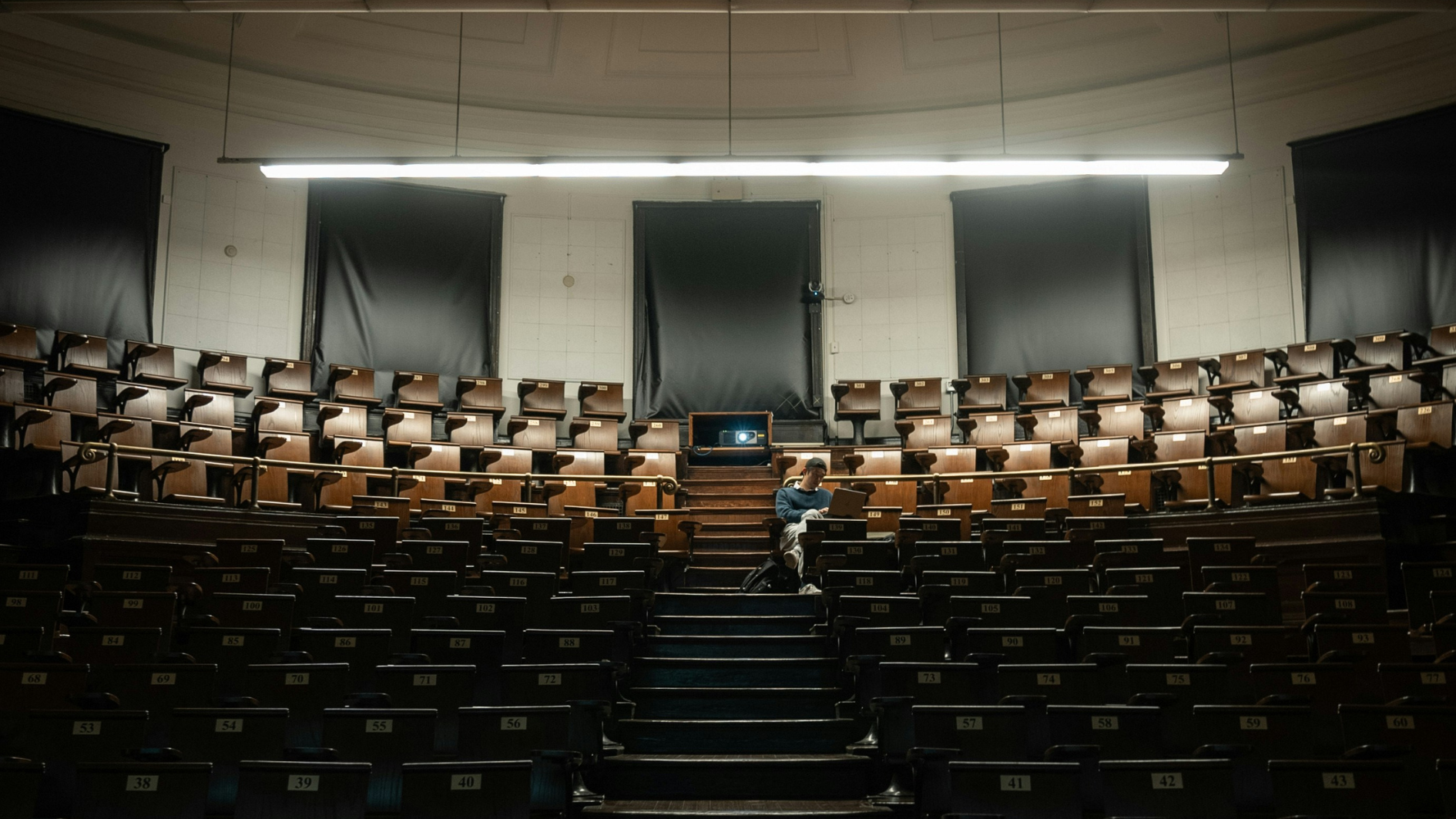
What proves more detrimental is an environment characterised by loneliness, high pressure, and fierce competition. Scholars must begin amassing achievements even before entering academic institutions and, once inside, continue consolidating their accomplishments while striving for promotion. Otherwise, they are forced to leave for more marginalized institutions or exit academia altogether – a system known as “up-or-out” (fei sheng ji zou). The original intent of this mechanism was to prevent academics from resting on their laurels after securing a position and neglecting further research. Yet in practice, records of depression, suicide, and death from overwork among young scholars highlight the worsening spiral of malignant competition. Moreover, corruption infiltrates the government through academic, social, and interest networks, as some competitors seek the support of those in power. Rumors and exposure of such cases provoke public outcry, damaging the credibility of academic institutions and government agencies alike.
As young scholars, we do recognize the difficulty and complexity of systemic reform. The Chinese political adage warns, “tight control leads to suffocation, while relaxation invites disorder” (yi zhua jiu si, yi fang jiu luan). Nonetheless, intellectual excellence demands reconstructing solidarity through our everyday practices. To overcome fragile solidarity, we must cultivate shared values, social responsibility, collaborative spirit, and mutual trust beyond fragmented career calculations, coalescing around common concerns such as anti-corruption, academic integrity, and advocacy of creativity.
Chinese academia should move towards supporting joint research projects, interdisciplinary initiatives, trans-institutional activities, and cross-sector partnerships to nurture these vital qualities of scholarship. In particular, young scholars need to heed the teachings of Analects, not only to enhance teamwork in research but also to learn how to live harmoniously with colleagues and build mutually progressive moral friendships in daily life. When educating undergraduates, equal emphasis must be placed on their mental health, ethical development, and academic achievement.
Finally, the government itself needs to address the toxic admixture and remove distorted implementations of Confucian meritocratic ideas at the institutional level. This appeal is not about judging a non-democratic system as good or evil but rests on more pragmatic concerns: any political community facing such deterioration and posing enduring risks to the system must take action to overcome them. The delicate balance between solidarity and individualistic pursuit is a challenge that faces societies globally, but one for which China’s particular intellectual tradition may illuminate the new path towards a solution. A generation of productive and united scholarship hangs on the government’s willingness to confront this challenge.
Max Junbo Tao is a PhD Candidate in Political Philosophy at the University of Hong Kong, graduated from the London School of Economics and Durham University. Dr. Dongyang Li is a Postdoctoral Global Academic Fellow in Law and Political theory at The University of Hong Kong.