
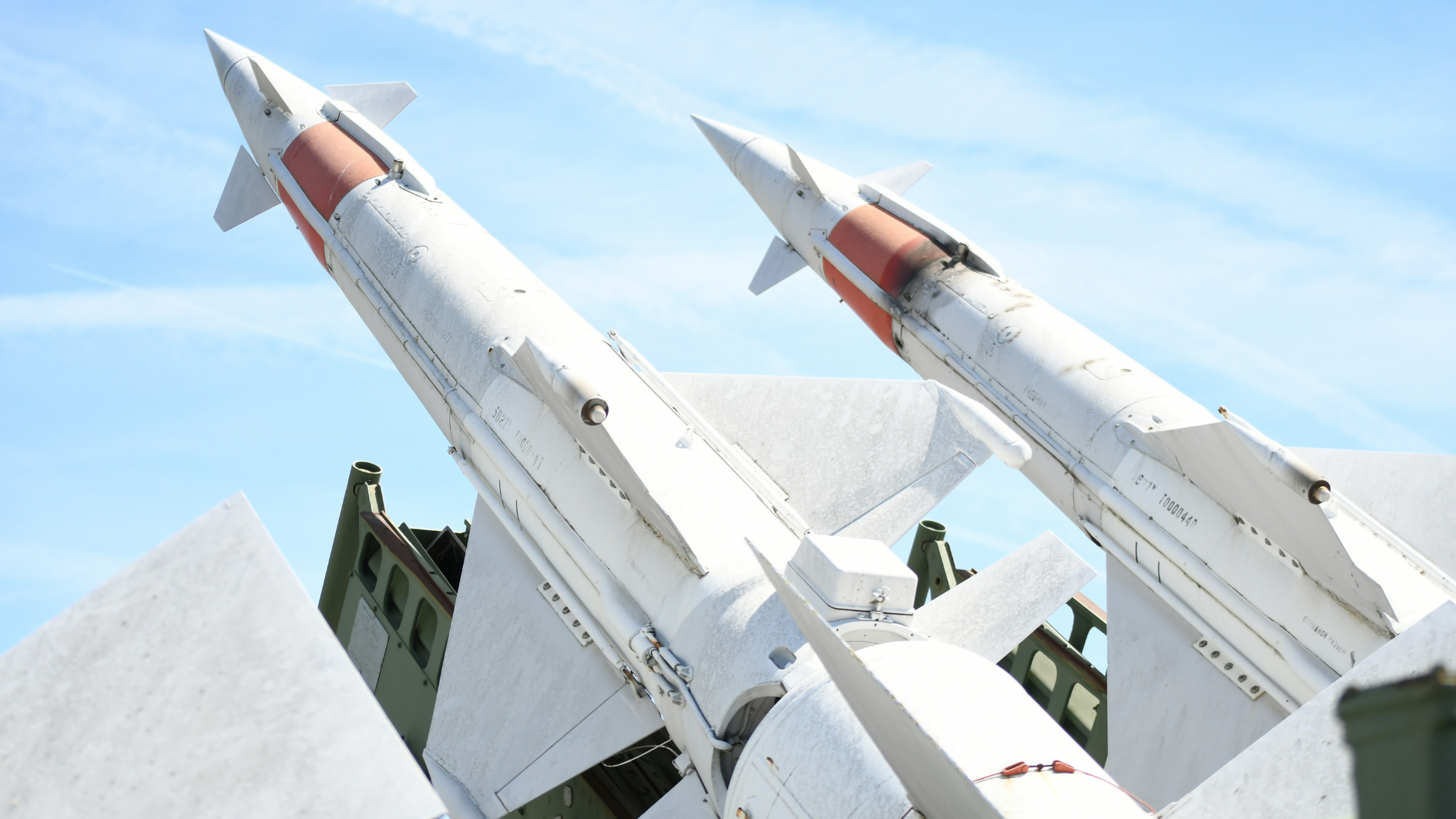
On an autumn day in 1984, a year defined by heightened Cold War tensions and hostility, a lieutenant colonel of the Soviet Air Defense Forces sat as the officer-on-duty at the Serpukhov-15 bunker near Moscow. Above him, a celestial rarity: sunlight reflected off high-altitude clouds aligned with the orbits of Oko, a system of satellites in the Soviet missile defence early warning satellite system. Oko processed this extraordinary set of celestial circumstances as an incoming US missile launch: the USSR was under attack, and it was up to the duty officer to notify his superiors.
Just as Oko had produced calculations from a bevy of variables, so did the officer on duty. On one hand, the officer, Stanislav Yevgrafovich Petrov, knew that just 25 days earlier on 1 September 1983, the Soviet armed forces had shot down a South Korean passenger jet, killing 269 people, including Congressman Larry McDonald. The USSR had been expecting retaliation. On the other hand, Petrov’s training had taught him that a first-strike nuclear attack by the United States was likely to involve hundreds of simultaneous missile launches to disable any Soviet means of a counterattack. Oko had only detected four missiles. Additionally, Oko had only become fully operational in 1978 and placed on combat duty a year prior in 1982. Considering these elements, Petrov flagged the warning as a false alarm. And with that decision, nuclear war was averted.
The story of Stanislav Petrov is frequently referenced in international debates regarding autonomous weapons systems. Autonomous weapons systems are an emerging class of weapons which, once activated, can select and engage targets without further human involvement, and, in the process, exercise discretion and self-direction to operate in a potentially complex and unstructured environment. Operating using a combination of sensors, algorithms, and artificial intelligence to detect, track, and engage targets, these weapons rely on machine learning, computer vision and decision-making models to engage in combat.
What Is an Autonomous Weapon?
The STM Kargu-2, for example, is the first weapons system identified by the United Nations as operating with autonomy. The Kargu-2 is a quadcopter drone that uses embedded machine learning algorithms and is designed to be a weapon capable of selecting and engaging human targets based on machine-learning object classification. Similarly, the Bayraktar TB2 medium-altitude Unmanned Aerial Vehicle has also been on the radar for its increasingly advanced autonomous features including target acquisition and navigation.
A key issue with the development and deployment of autonomous weapons systems is their lack of meaningful human control. Meaningful human control means that the weapon is considered to fulfill several criteria: first, it must allow for human intervention, meaning that human operators must be able to supervise the weapon and potentially abort, deactivate, or terminate the operation. Second, it must allow for human judgement, meaning that a human must be able to make a legal and moral judgement over the acceptability of the effects of an attack. In addition, it must ensure a human user is both legally and morally responsible for the effects of an attack by preventing the obscuration of decision making factors. In addition to these factors, meaningful human control is context-based, dynamic, and situation-dependent. Hence the ubiquity of the allegory of Stanslav Petrov, which asks those considering the legality of autonomous weapons systems whether a system operating using artificial intelligence could consider all facts and be entrusted with the right to kill.
However, is it justified to conclude that without meaningful human control, the question of ‘who is to be blamed when a machine kills?’ cannot be answered?
An Accountability Vacuum
Without meaningful human control, there is no clear indication of who is responsible for actions taken in a conflict or war setting. Thus, scholars like Jie Guo and civil society movements including the Stop Killer Robots Campaign have increasingly argued that militarised artificial intelligence creates an accountability vacuum. In the development and deployment of militarised AI, there emerges an ethical and legal void.
International frameworks designed for conventional warfare provide little in the way of clear guidance for the AI age. The Right to Remedy, a foundational principle in human rights theory, concerns redress for injustice. First, it seeks to vindicate one’s other rights before an independent and impartial body. Second, it seeks to assist in the secession of violence. Third, it seeks to ensure the victim a form of reparations. At its core lies the principle of accountability, as any person who violates the freedoms or rights of others must be held responsible for the harm caused.
Traditional warfare offers a clear chain of command, which can allow for a Right to Remedy. The principle of command responsibility has held military commanders accountable for war crimes that were committed by their subordinates if they failed to take the necessary and reasonable steps to prevent such violations.
This command responsibility is obscured during the deployment of autonomous weapons systems because the decision-making process is divided amongst various stakeholders: the machine itself, developers, and operators. This multistakeholder makeup means that no single actor can definitively be held responsible for wrongful actions because these systems operate without direct and meaningful human control.
Furthermore, the militarised AI accountability gap is exacerbated by the black-box nature of autonomous systems. Black box systems operate in a way that is opaque to both developers, owners and operators: inputs (like sensor readings and environmental data) or outputs (target identification and engagement) are visible, but the internal processes that turn the inputs into an output are incomprehensible or inaccessible. Moreover, the algorithms that govern the behaviour of these autonomous weapons systems evolve, becoming even more complex through machine learning. As a result, it becomes difficult to assess whether the weapons system followed principles enshrined in international humanitarian law, like proportionality and distinction. In the event of system failure or malfunction, the opaqueness of a black box system also makes it harder to identify root causes, assign responsibility, and possibly even prevent future errors.
In sum, the obscuration of command responsibility and the black box nature of military artificial intelligence significantly challenge the Right to Remedy because there is no clear direction on who the perpetrator is or how the decision to kill was made. Furthermore, the absence of meaningful human control over autonomous weapons systems fundamentally undermines the principle of individual accountability, leaving victims without recourse and remedy to justice through the traditional mechanisms of command responsibility or criminal liability.
Can AI Weapons Be Made Accountable?
Although AI weapons systems are novel, the questions that they raise for accountability have parallels to other weapon types. Looking at how international law has dealt with landmines can offer insight for how to approach AI weapons. Landmines are defined as ‘indiscriminate’ weapons in international conventions because after being set, they explode once triggered – regardless of whether the target is a soldier or an innocent civilian.
Let us consider the Eritrea-Ethiopia Claims Commission and how it addressed landmine issues that arose from the Badme War (1998–2000). The Commission explored post-conflict claims that Eritrea and Ethiopia were liable for civilian deaths and injuries arising from the use of anti-personnel landmines. Landmines are regulated by various treaties including the UN Convention on Certain Conventional Weapons, which is also being considered as a potential framework to govern the use of autonomous weapons systems.
The Claims Commission’s final decision awarded Ethiopia a compensatory judgment worth US$1.5 million for deaths and injuries caused by landmines. Crucially, the Claims Commission did not treat the continued operation of the mines without human oversight as a break in the chain of responsibility. Thus the legal fault was associated with Eritrea’s initial deployment and post-conflict obligations. The Eritrea-Ethiopia case is not a standalone, and similar logic has prevailed in other cases involving indiscriminate legacy weapons including the 1996 Nuclear Weapons Advisory Opinions by Judge Higgins and Judge Shahabuddeen of the International Court of Justice and the 2012 Santo Domingo v Colombia case tried in the Inter-American Court of Human Rights.
Without Master Nor Maker
There is a widespread view of emerging weapons classes as machines that act without master nor maker. This perspective is especially common in civil society engagements with the topic. Civil society often uses norm entrepreneurship to influence standards of appropriate behavior in international politics. This is often characterised by strategies of emotionalisation and social pressure to advance the debate on possible regulation. This framing is very helpful in the cultivation of urgency, encouraging stakeholders to consider the legality of this new class of weapons. However, it negates the centrality of human accountability in international law.
Autonomous weapons systems and the artificial intelligence technologies that animate them do not exist in a vacuum. They are also not, as researchers Ann-Katrien Oimann and Adriana Salatino put it in a 2024 article in the journal AI and Ethics, ‘simply machines’, but rather socio-technical systems that involve machine components consisting of hardware and software as well as a multitude of human elements including actors in development, operation and use.
In the usage of military artificial intelligence, command responsibility may be obscured but it is not completely eliminated. Contemporary military operations increasingly feature non-human systems acting as subordinates within military command hierarchies. This includes autonomous weapons systems of various manifestations including Uncrewed Aerial Systems and Autonomous Counter-Rocket, Artillery, and Mortar (C-RAM) systems. During the February 2026 airstrikes on Iran, the Low-Cost Unmanned Combat Attack System, or LUCAS drone was used for the first time in combat by the US army. LUCAS is a one-way attack drone reverse-engineered after the Iranian Shahed-136. These subordinates are deployed for usage by human actors who have both command and accountability responsibilities in a conflict setting. They are neither self-procured nor self-programmed to satisfy the military strategy of a particular actor independent of human direction. Hence, although autonomous in fulfilling their functions, these emerging weapons systems cannot entirely be considered as autonomous in their tasking, operational parameters, or their integration into command-and-control structures.
If Petrov – the Soviet duty officer – had not treated the output of the Oko early warning system as a false alarm and if nuclear war had not been averted, any history teachers of the nuclear wasteland would not have blamed him or Oko. They would have blamed the military strategists who had adopted the doctrine of retaliatory counter strike, the political leaders who authorised it, and the military command leadership that enforced it. Indeed, military ethicists – such as Neta Crawford in Accountability for Killing (2013) and Michael Walzer in Just and Unjust Wars: A Moral Argument with Historical Illustrations (1977) – have argued that the political and military architects of the strategic doctrines that enable indiscriminate harm are responsible for their consequences.
It is exactly here, with the political officials and the generals, where the accountability lies and responsibility for autonomous weapons systems usage should be taken. In today’s world, where international regulation of these AI weapons is absent but developers continue to innovate without prioritising meaningful human control, the need for accountability could not be more pressing.