
In 1963, Robert Schuman, one of Europe’s founding fathers and the first president of the European parliamentary assembly from 1958 to 1960, published eight of his lectures in his book Pour l’Europe. In his lectures, he outlined the core ideas that guided his political work. Among them, one finds the strikingly contemporary assertion: ‘A constructive, valid European task undoubtedly comprises ensuring collective defence against all types of possible attack.’
Schuman’s doctrine held that European integration should proceed gradually, beginning with cooperation on coal and steel, and progressively transferring various national competences to the jurisdiction of supra-national European institutions. This step-by-step approach was meant to respond to the challenges different eras brought to member states, resulting in the Schengen area and the monetary union, all with the overarching aim of making a collective Europe more sovereign and competitive on the global stage.
It may be time for the European Union to open a new chapter, one that entails an agreement of comparable magnitude to the Single European Act of 1986 or the Maastricht Treaty of 1992 – a treaty that would federalize defence prerogatives in order to pool resources and coordinate military efforts, enabling competitive and sovereign European defence capabilities.
The looming geopolitical tensions that have emerged over the past five years are undoubtedly one of the greatest challenges Europe will face in the coming decades. The Russian war on Ukraine highlighted the determination of Putin’s imperialist ambitions, as well as the limits of European military capabilities after decades of underinvestment. Donald Trump’s return to the White House – accompanied by his unpredictability and threats on NATO, Greenland, and Ukraine – has catalysed the European community to seriously reconsider the defence chapter of its policy playbook.
Despite this backdrop, defence remains, to this day, a national prerogative. European Union member states retain full sovereignty over their military spending and operations. The European defence industry is fragmented, marked by national champions and significant duplication. These discrepancies lead to inefficiencies and vulnerabilities.
TURNING TO DEFENCE
For decades, Europeans found comfort under the U.S. military umbrella. Defence spending remained low, as American hegemony helped maintain a relative peace on the continent. A wake-up call should have occurred in 2014, following Putin’s annexation of Crimea. Yet, the European community failed to grasp the urgency of strengthening and optimising its military capabilities. Concerns over European defence resurfaced in 2016, during Donald Trump’s first presidency, when he threatened to withdraw from NATO and then again following Russia’s full-scale invasion of Ukraine in 2022. Yet, still, this was not enough to provoke decisive, unified European action on defence.
It has taken the dramatic return of Donald Trump to the White House, along with his infamous remark encouraging Russia “to do whatever the hell they want” to NATO members who fail to meet the military alliance’s spending targets, for Europe to finally mark 2025 as the year of change in its defence posture. The European Commission has created its first defence portfolio – akin to a European-level defence ministry – appointing Andrius Kubilius as the inaugural Defence Commissioner. In March, Commission President Ursula Von Der Leyen unveiled the Rearm Europe Initiative, which allocates a total envelope of €800 billion, including €150 billion in joint loans aimed at the purchase of military equipment through the SAFE (Security Action for Europe) instrument.
However, leaders of member states have concurrently voiced their own ambitions for greater national strategic autonomy, acknowledging the long-standing neglect of their armed forces and need for a renewed commitment to addressing these failings. Germany stands out in particular. The new Chancellor, Friedrich Merz, pledged in March 2025 to do ‘whatever it takes’ to strengthen the country’s defence, and has outlined plans to build the strongest conventional army in Europe. This represents a significant shift from Germany’s traditionally cautious military stance. Likewise, in July French President Emmanuel Macron declared that ‘we are living through a moment of profound shifts. We have long sensed their imminence. Today, those shifts are underway.’ He then announced a doubling of France’s defence budget, from €32 billion in 2017 to €64 billion by 2027.
Since then, political will has clearly emerged, forged by a year of escalating tensions and reinforced by the recent strains in transatlantic relations, notably with the United States over Greenland. France ordered a new aircraft carrier. Germany approved an €80 billion procurement plan covering 154 major military programs (with just 8% of American equipment), including four submarines and the Type F127 frigate program developed by Germany’s TKMS. While momentum is moving in the right direction, member states still face significant work to make up for years of delay. Slow supply chains and limited production capacity have long been a constraint, pushing European countries to rely on American and foreign supplies to sustain Ukraine and further deepening fragmentation of the defence industry.
INTEGRATION DILEMMA
Despite this surge in political will and spending, Europe’s defence posture remains fundamentally constrained. The European Commission, while possessing the ability to make financing available, has limited authority over where purchases are made by member states. In 2024, the Commission reported that since the onset of Russian aggression against Ukraine, 78% of defence equipment purchases have been made outside the Union, with the United States alone accounting for 63% of the total. While the precise number is debated among experts, as exact data on such sensitive topics is rarely made available, consensus has found that over 60% of military equipment comes from abroad.
This pattern doesn’t only raise concerns from an economic standpoint – reinjecting the money raised for military spending within the European Union would give a breath of fresh air to many European economies struggling with weak growth – but threatens European strategic autonomy and long-term sovereignty. For instance, in March 2025, rumours and concerns rose around the reliance of software updates for the F-35 fighter jets produced by the American weapons manufacturer Lockheed Martin. Allegedly, if the company decided to block updates on certain F-35, the jets would be made inoperable. This would impact thirteen European countries, including Germany, Italy, Belgium, and the Netherlands. More pragmatically, investing in the continent’s domestic defence industry could bolster Europe’s capabilities, spur innovation, and potentially generate economic benefits from exports. It would also secure provisioning and ownership over supplies in the case of a sustained conflict.
Switching to European made gear will not be an easy task. Defence companies are largely organised around national priorities, with demand primarily driven by national governments favouring their domestic industries. These close ties between governments and national firms have resulted in a fragmented landscape, marked by a large number of national defence companies operating in relatively small markets. Europe accounts for twenty types of frigate and over 10 types of tanks. As a consequence, production levels remain insufficient to meet the demands of the current geopolitical climate.
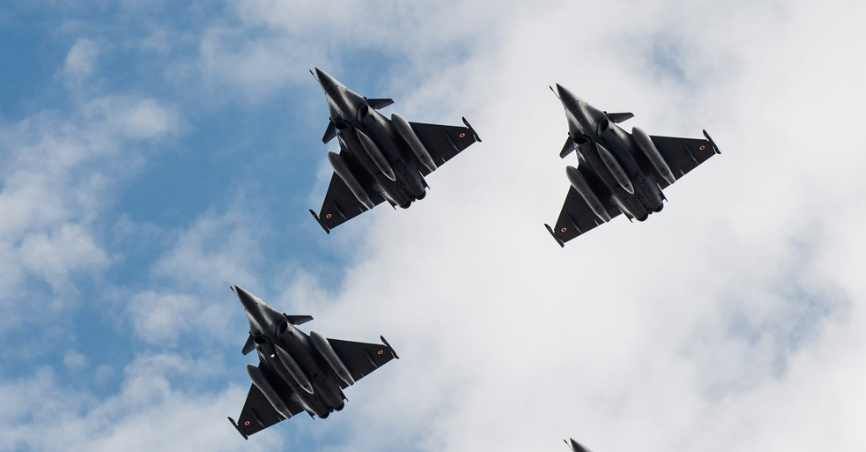
For instance, among the several types of fighter jets made in Europe, one can find the Rafale, from the French Dassault Aviation, mainly produced in France. Working together, the United Kingdom, Italy, Germany, and Spain have created Eurofighter GmbH that produces the Eurofighter Typhoon. The Swedish Saab Aerospace manufactures the Saab JAS 39 Gripen.
Such an architecture creates a duplication of supply chains, which restrains the capacity to leverage economies of scale, impeding increased production at a faster pace and lower cost. Furthermore, it leads to operational shortcomings as the disparity in materials used across countries hampers interoperability and production capacity, particularly in ammunition as highlighted by the war in Ukraine.
THE COOPERATION BLUEPRINT
Greater cooperation on defence has the potential to confer great benefits for Europe. According to the European Parliamentary Research Centre, greater cooperation could save member states between €24.5 and €75.5 billion annually. Defence actors would also benefit from pooled research and development, an essential though non-quantifiable element in safeguarding European sovereignty and securing a competitive edge in the global market.
While previous efforts at cross-European initiatives have proven mixed results thus far, they provide a roadmap for what greater cooperation could look like. Airbus, for example, was initially launched as a consortium by Germany, France, Spain, and the UK, and quickly proved effective in the commercial aviation sector. The company later developed a military division, led by Spain, Germany, Italy, and France, which contributed to the Eurofighter Typhoon project, though its order list has fluctuated over time as exemplified by France’s decision to prioritise its national champion, Dassault Aviation, and its Rafale fighter jet over those produced by Eurofighter GmbH.
A less successful example is MBDA, the missile and missile systems company jointly owned by Airbus, the UK’s BAE Systems, and Italy’s Leonardo. Its organisational structure is divided into national branches across France, the United Kingdom, Italy, Germany, and Spain. As a result, the production line has been designed to balance the interests of its shareholders rather than prioritize efficiency. For instance, unfinished missilesare shipped across the Alps between France and Italy several times for different phases of production, adding months for little industrial benefit.
Despite early obstacles, recent initiatives demonstrate a clear shift towards deeper defence integration within the Union. Instruments such as the Security Action for Europe (SAFE) incentivise joint procurement and prioritise European supply chains, signalling a willingness to pool sovereignty in strategically sensitive domains. Earlier measures, including the European Defence Fund (EDF), similarly promoted collaborative capability development and cross-border industrial cooperation.
These initiatives prove that the EU identified its weak points, and underline its growing commitment to integrating defence capabilities, strengthening its industrial base, and reducing external dependencies.
TRANSCENDING THE NATIONAL
While these initiatives are great incentives for increased collaboration, integration, and compromise among Member States, they are insufficient considering the scope of security threats and continued structural barriers to cooperation as long as defence policies are nationally-oriented. Furthermore, European defence integration is a key step towards promoting European sovereignty, which is increasingly crucial as Russia flexes its imperialist impulses and the United States weighs its overseas security commitments. Against this backdrop, cooperation is no longer optional but essential. National champions, often working in their own silos, give rise to fragmented supply chains, each with separate costs and timelines, which contributes to significant inefficiencies.
Europe possesses all the ingredients to develop an integrated and endogenous defence industry that is not reliant on foreign defence firms and production, which would allow it to stand strong, ensure deterrence, and protect its interests. It is home to a pool of top-tier defence companies, equipped with leading expertise, advanced technologies, and specialised capabilities. European institutions have the ability to promote collaboration, but they lack the authority to enforce it on member states. Harnessing Europe’s potential into operational strength requires member states to move beyond national perspectives and ambitions.
Member States will have to come to an agreement, with the weight and ambition of the founding treaties of 1986 and 1992. These treaties also faced resistance, rooted in the difficulty of relinquishing national mandates to the European Union. Yet they are now unquestioned foundations of European identity, having brought prosperity and unity to its members. If Europe is serious about achieving strategic autonomy, defence can no longer remain the principal exception to integration, it must instead become the Union’s next institutional frontier.
Jade Viallet is a geopolitical and macroeconomic analyst specializing in European policy, defence, fiscal dynamics, and regulatory developments, with a dual Master’s degrees from IE University. She is experienced in producing data-driven strategic insights and predictive analysis.