
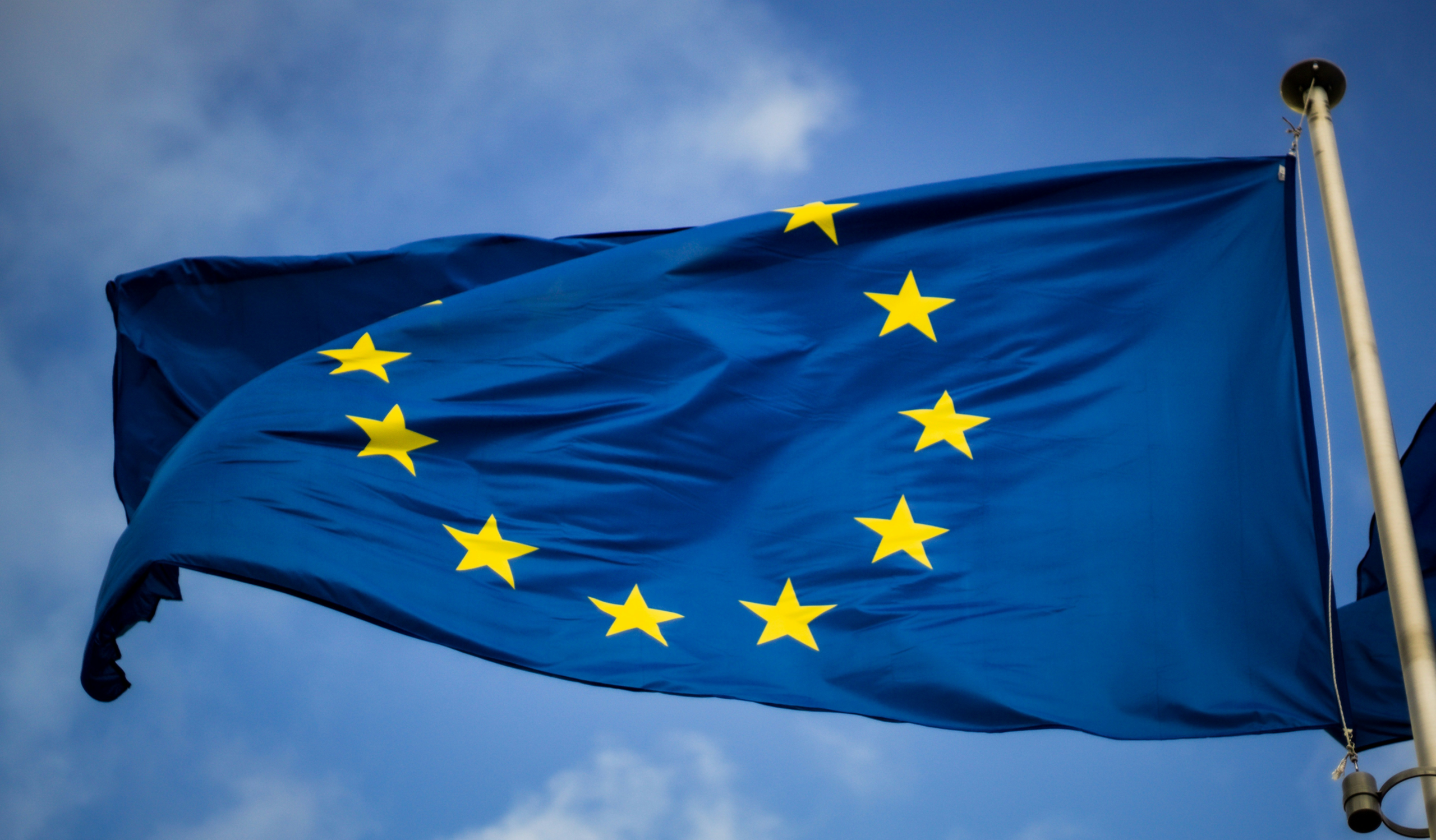
The European Union (EU) enlargement policy is often hailed as its most successful foreign policy tool. By imposing economic and political conditions on prospective members, the policy has spread democratic values, fostered prosperity, and anchored stability across the continent. Despite its flaws, enlargement has undeniably incentivised democratisation, as seen across Central and Eastern Europe. For the Western Balkans, enlargement has at least offered a framework of stability and association. Yet compared to Central and Eastern Europe, the EU’s promise of membership has proven far weaker in the Western Balkans, with progress halting, reversals multiplying, and credibility steadily eroding. Among the former Yugoslav states, Slovenia and Croatia have successfully joined the Union. The remaining five countries, along with Kosovo, continue to wait, as the European Commission acknowledges the profound challenges that lie ahead.
The path for North Macedonia has been uniquely arduous, defined less by standard technical benchmarks and more by extraordinary diplomatic concessions. After resolving a decades-long dispute with its southern neighbour, Greece, by changing its name under the 2018 Prespa Agreement, the nation now faces a new impasse involving historical and linguistic demands from its eastern neighbour, Bulgaria. This situation highlights a growing tension in the accession process: the struggle to balance the Commission’s rigorous reform requirements with the preservation of national sovereignty.
When Solidarity Meets Unanimity
The EU stands today as a unique political and economic partnership of 27 member states, representing one of the most ambitious and enduring projects in the realm of international cooperation. It was born from the ashes of two devastating World Wars, and from the project’s original goal of securing lasting peace and economic prosperity, it has evolved over decades into a vast single market and geopolitical heavyweight. The promise of EU membership offered a critical ‘anchor of stability’ and market economy to Central and Eastern European countries, solidifying the continent’s democratic space and extending the Union’s influence.
The 2007 entry of Romania and Bulgaria, agreed amid lingering concerns over the two countries’ preparedness, was followed by persistent shortcomings in the rule of law, judicial reform, and the fight against corruption. During this period, intense political pressure to consolidate democracy in Southeast Europe often overshadowed concerns about institutional readiness and full compliance with the Copenhagen criteria. The EU admitted the countries despite acknowledged deficiencies, relying on the Cooperation and Verification Mechanism, a post-accession monitoring tool that critics argue proved insufficiently deterrent against backsliding. These experiences hardened scepticism among existing member states and shifted the emphasis from geopolitical urgency to risk management and conditionality. As a result, the political context shifted; member states, conscious of earlier ‘mistakes’ with Romania and Bulgaria, now proceed with greater caution. This approach is codified in the ‘fundamentals first’ approach for current EU candidates, where the most demanding criteria (covering the judiciary, fundamental rights, and public administration) must be tackled at the outset and remain subject to EU scrutiny for the full duration of the accession process.
Veto-playing
This caution has hardened into resistance. Enlargement today collides with the principle of unanimity, the rule that every member state must agree before a candidate can move forward. Supporters argue that unanimity safeguards national interests. Yet in practice, this safeguard is being misused. Instead of being reserved for a genuine threat to a member state’s constitutional or strategic security, the veto is increasingly wielded for narrow, domestic political gains. Enlargement, once a powerful symbol of European solidarity, risks becoming hostage to what can only be described as ‘national solitude’, wherein a single country’s highly specific local agenda is prioritised over the Union’s declared strategic and geopolitical goals. When every member state holds a veto, enlargement becomes less about evaluating a candidate’s readiness and more about negotiating the particular interests of those with the power to block.
The requirements for EU accession are organised into three key pillars: the Political Criteria (crucial for promoting democracy and the rule of law, human rights, and respect for and protection of minorities), the Economic Criteria, (the capacity to cope with competitive pressures within the EU) and the Administrative and Institutional Capacity (Acquis), which is the ability to adopt and effectively implement the entire body of EU law. This technical assessment is meant to be the definitive yardstick for accession. However, when a specific member state holds a veto, enlargement becomes less about evaluating the candidate’s compliance with these criteria and more about negotiating the particular interests of those with the power to block, which ultimately leads the focus from collective European progress to bilateral bargaining.
The Logic of National Solitude
National solitude occurs when a member state invokes its veto not to protect the Union’s shared objectives, but to advance its own political agenda. This posture undermines trust and fractures multilateral decision-making. For citizens of North Macedonia, the consequences of this have been painfully real. Since its independence in 1991, the country’s EU aspirations have been repeatedly blocked by Greece and Bulgaria. The 2003 Thessaloniki Summit and the 2004 Stabilisation and Association Agreement briefly raised hopes. Yet accession was derailed first by Greece’s objections over the country’s name and, more recently, over history, language, and identity. Greece contended that the use of the name ‘Macedonia’ by its northern neighbour implied an unjustified territorial claim on its own Greek province, also called Macedonia. Athens further argued that it constituted an appropriation of Hellenic cultural heritage linked to the ancient Greek kingdom. Greece weaponised its veto power, asserting the name endangered its national security and regional stability. This fundamental dispute severely stalled the entire accession process for over a decade until the country was formally renamed North Macedonia under the 2018 Prespa Agreement, temporarily clearing the way for EU talks.
Unlike the territorial dispute with Greece, Bulgaria’s objections are primarily cultural and historical. Sofia challenges the existence of a distinct Macedonian language and identity, demanding that North Macedonia acknowledge ‘Bulgarian roots’ and revise history textbooks to reflect a ‘shared history’. By successfully pressing for constitutional changes to recognize a Bulgarian minority, Sofia has moved these identity disputes into the core of the accession process. This shift transforms the path to membership from a matter of technical compliance into a conflict over national narratives and the right to self-determination. The EU, meant to act strategically for collective stability, has instead been paralyzed by a bilateral quarrel, effectively holding its strategic objectives hostage. For citizens of North Macedonia, the frustration is profound: decades of reforms and painful compromises have been met not with solidarity, but with vetoes.
The European Void
Each delay deepens disillusionment and pushes the Western Balkans to look elsewhere. Russia, China, and Turkey eagerly fill the void, offering alternative partnerships that threaten to erode the EU’s influence. These external actors often present themselves as reliable alternatives, providing economic investment, political engagement, and security cooperation without the same conditions attached to EU membership. For young people in North Macedonia, this creates a stark choice between a distant, sometimes obstructive EU and powers that appear more willing to engage.
This shift fundamentally hinders the EU’s goals of promoting democracy and the rule of law. The EU’s primary tool for good governance is conditionality – the promise of membership in exchange for difficult reforms. When actors like China offer massive investment without requiring judicial independence or fighting corruption, it removes the incentive for local elites to undertake painful structural changes. By offering a ‘no strings attached’ alternative, these powers directly undermine the EU’s leverage, allowing corrosive practices like state capture and democratic backsliding to persist. For instance, China primarily uses huge infrastructure lending via the Belt and Road Initiative (BRI), with projects in Montenegro and Serbia creating significant public debt and dependency that bypasses EU accountability rules. Meanwhile, Russia capitalises on historical and cultural ties, especially in Serbia, with the main goal of destabilisation and slowing democratic reform through disinformation campaigns that amplify anti-Western sentiment. This acceptance of alternative models threatens the long-term stability and democratic future of the entire region by allowing practices inconsistent with European values to flourish.
These repeated blocks demonstrate how national solitude can stall political progress, but also societal development. Each delay forces North Macedonia to adjust its domestic policies, invest political capital in negotiations, and manage public expectations, often at significant social and economic cost. Citizens see reforms implemented in good faith, only to be met with vetoes that feel arbitrary and detached from the country’s readiness to join the EU. Over time, this breeds frustration, apathy, and a growing perception that European integration is more about furthering the interests of existing member states than a fair assessment of a candidate country’s merits. Moreover, the psychological impact on society cannot be underestimated: frustration which has now spanned two decades, apathy, and a growing perception – especially among young people – of stagnation and uncertainty, which ultimately leads North Macedonians to look for alternatives and different partners for political salvation.
National solitude also directly undermines regional cooperation. In the Western Balkans, disputes such as those between Greece and North Macedonia or Bulgaria and North Macedonia demonstrate how these bilateral concerns can stall EU-led initiatives, delay joint projects, and erode trust among neighbouring countries. This dynamic slows reform, complicates regional collaboration, and diminishes the EU’s credibility as a coherent and reliable regional actor.
Other Western Balkan countries watch North Macedonia’s experience and adjust their own strategies accordingly, often delaying reforms or recalibrating expectations. In short, the North Macedonia case sends a powerful, negative signal across the Western Balkans: the EU’s promise is not credible, and the political cost of reform may not be worth the uncertain payoff. In this sense, the actions of one member state ripple far beyond the immediate dispute, slowing integration for the entire region and weakening the EU’s promise of stability and prosperity across the Western Balkans.
Another clear instance of the veto being used as a geopolitical weapon involves Hungary and its obstruction of Ukraine’s EU path. Hungary’s use of the veto against Ukraine demonstrates how narrow domestic interests can be weaponized as political blackmail, paralyzing the Union’s collective security response. Meanwhile, the perception of EU unreliability and the constant threat of bilateral vetoes have spurred the largest candidate country, Serbia, to adopt a ‘Policy of Balance’, turning toward Russia and China for investment without the ‘strings’ of democratic reform, effectively neutralizing the EU’s leverage in the region.
Enlargement as a Credibility Test
Enlargement is more than a bureaucratic process. It is a credibility test for the Union’s multilateralism. If individual member states continue to weaponise their vetoes, they risk weakening trust, empowering external actors, and undermining the very solidarity the EU was built on. The way forward demands reform. Getting rid of unanimity in enlargement decisions, such as through the adoption of qualified majority voting (which requires a 55% of member states with at least 65% of the EU population) has been floated as one solution. Without such change, the EU will remain trapped between solidarity as an ideal and solitude as a reality. And in enlargement decisions, it has been floated as one solution.
The promise of enlargement, keenly felt as a big geopolitical opportunity across the Western Balkans, has become a fundamental credibility test for the Union itself. The ongoing usage of unilateral vetoes demonstrates the fragility of EU multilateralism, where the national interest of one member state is allowed to outweigh the collective strategic goal. If member states continue to prioritise national solitude over collective solidarity, the EU risks losing credibility not just in its own backyard, but on the global stage. Reforming the process – perhaps through qualified majority voting – is essential. Otherwise, the promise of enlargement will remain just that: a promise.