
French philosopher, mystic and activist Simone Weil transcended the social norms of her time and embodied paradoxicality in nearly every facet of her life — T.S. Eliot described her as ‘a stern critic of both Right and Left; at the same time more truly a lover of order and hierarchy than most of those who call themselves Conservative, and more truly a lover of the people than most of those who call themselves Socialist.’ Raised in an agnostic Jewish family, Weil embraced Christianity as an adult and had several mystical experiences. Despite her intense devotion to the Eucharist, she refused baptism, criticised the Church, and never formally converted.
On the one hand, Weil was a champion of the common people, especially of the oppressed. As a young woman, she worked at a Renault car factory to better understand the exploitation of working-class people. She gave up sugar at the age of six in solidarity with the soldiers entrenched on the Western Front and died in England at the age of 34, refusing to eat more than the rations allotted to French citizens during the Nazi occupation of France.
On the other hand, she was a strong proponent of individualism, expressing horror at what she called the collectivity. She denounced political parties as totalitarian and spent significant time in isolation, often choosing to live on the margins of society, detached from material comfort. The political turbulence of her time often contributed to her isolation, as Weil lived through the Spanish Civil War and both World Wars, fleeing from the Nazis near the end of her life.
Perhaps most central to her philosophy is the concept of spiritual solitude. Weil saw uninterrupted attention as the foundation for justice and love; in Waiting for God Weil states that ‘Attention is the rarest and purest form of generosity.’ Yet, giving one’s full attention to another human is nearly impossible and requires a complete emptying of oneself. Only when a soul empties itself of all its preoccupations can it offer full compassion to another being, she claims.
Writing nearly a century ago, Simone Weil provides relevant, yet often overlooked, guidance on how to heal partisan polarisation and orient political processes toward goodness. Her ideas position solitude as a necessary condition for solidarity—an approach that may soothe the political turmoil unfolding today.
Weil felt deeply troubled by the group mentality that enabled twentieth century fascism to prosper. These same concerns resurface today amidst a paucity of intellectual independence produced by media environments that encourage divisions over independent thought.
Weil’s spiritual and political considerations suggest that a certain distance from these overwhelming streams of information may allow us to safeguard our intellects and attention, to engage with politics more meaningfully.
The Partisan Spirit and Intellectual Leprosy
In the midst of European fascism, Weil published a scathing objection to political parties, arguing that parties deprive people of the ability to think for themselves. She challenges Jean-Jacques Rousseau’s notion that the general will of a nation conforms to justice, by pointing out that his theory only holds under certain conditions: There must not exist any form of collective passion, and people must be able to express their will regarding issues of public life without merely choosing between various individuals or ‘irresponsible organisations.’
She uses an analogy of water to illuminate her concern about how collective passions disrupt the balance of the general will. When each person thinks freely and independently, their errors will balance each other, bringing their political outcomes closer to truth and justice. Similarly, the constantly colliding particles in a body of water cancel each other out, allowing the water to rest in stillness and reflect the images of objects with unfailing accuracy. If, however, people are overtaken by a group mentality that overrides individual conscience, the general will inevitably fails to converge at justice. Likewise, when the same body of water is set in motion by a violent current, it suddenly ceases to reflect images, regardless of whether it is moved by a single current or multiple conflicting ones.
Weil sees a great danger in collective passions or, rather, powerful ideological forces propagated by political parties. Based on her observation that the partisan spirit makes people blind and deaf to justice and pushes even decent men to persecute innocent targets, she calls for an abolition of all political parties. While this radical proposition invites discussion, it is worth setting Weil’s views on political parties aside for a moment in order to consider the deeper point she makes.
She expresses serious concern about her contemporaries’ tendency of taking sides. Whether it be a political, cultural, artistic or scientific matter, she believes they are too quick to divide themselves into opposing camps:‘Instead of thinking, one merely takes sides: for or against. Such a choice replaces the activity of the mind. This is an intellectual leprosy.’
Weil developed these ideas while witnessing the Nazis fragment and devastate humanity in the 20th century, but these words may just as easily have been written in response to the intensified levels of affective polarisation that divide communities across the globe today. How can a person possibly shield themself from the intellectual leprosy of which she speaks?
Guarding our attention from manipulation may be the most effective way to restore justice, balance the general will and stand in compassionate solidarity. But protecting our attention demands a tremendous amount of discipline.
Retreat as a Path to Resistance
It is well known that our attention has become the most valuable commodity in the multi-billion dollar economy of mass media consumption. Once locked into a dopamine-inducing algorithm, our brains remain virtually powerless against the overwhelming current of content streaming into our minds. Yet with full knowledge of the cognitive decline that these algorithms produce, many willingly surrender their attention and agency on a daily basis.
Active disengagement with such attention-sucking technologies represents a contemporary application of Weil’s urge to withdraw from forces that inhibit our thinking at the expense of democratic politics. Numerous empirical studies confirm that engagement with social media increases political polarisation—the very group mentality Weil cautioned against.
Even those who have managed to limit their engagement with algorithms subject their attention to a paralysing amount of information from an endless news cycle. While citizens should certainly remain informed to hold those in power accountable and make sense of the moment in which they live, news consumption is unproductive if it generates despairing pessimism or desensitised numbness.
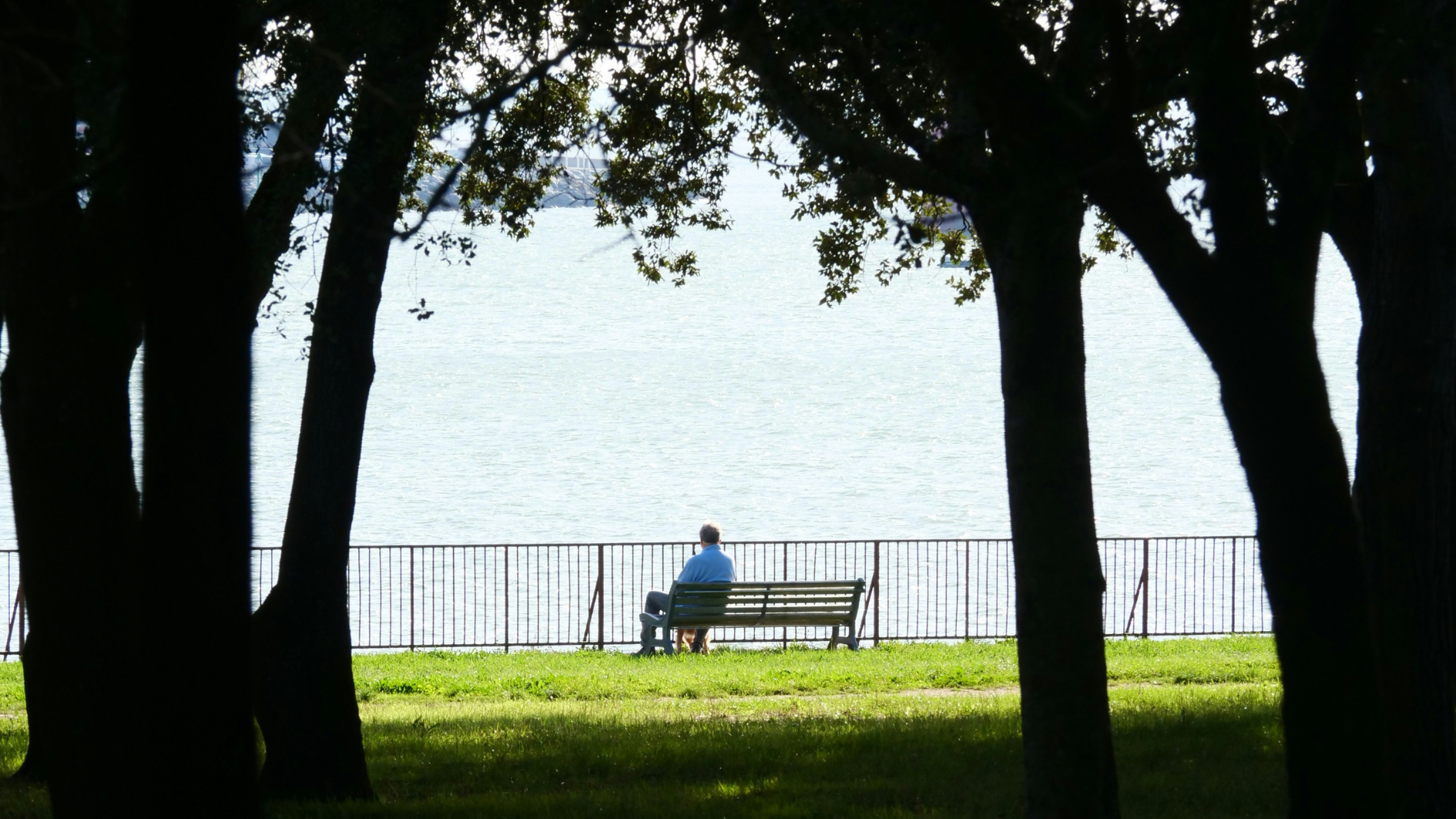
If we are to guard our attention from enslavement, it appears crucial to intentionally allocate time away from distractions to process the gush of worldly information engulfing our mind. This type of retreat does not imply an escape into apolitical withdrawal but instead opens the possibility of independently contemplating social and political challenges.
Weil herself retreated to convents and monasteries for extended periods of time throughout her life where she experienced major turning points in her spiritual and personal development. Rather than serving as an escape from the world, these withdrawals helped Weil cultivate virtues, particularly her understanding of attention, which she considered the highest form of prayer. Just as a monk withdraws from the world in contemplative prayer, so as to engage more fully with it, those striving to engage meaningfully in the political sphere may benefit from a similar form of secular monasticism.
This idea of withdrawal need not take the form of prolonged physical isolation or radical asceticism. Rather, it involves separation from any influence or distraction that diverts a person’s ability to give their full attention to another human’s needs and walk with them in their sufferings. In other words, a person does not need to be hiding in the French countryside like Weil to log off social media.
While Weil recognised that it is extremely difficult for humans to put their own needs aside and give their full attention to another being, she also noted that the simplest of actions enable us to counteract our egos; she wrote that the love of neighbour in all its fullness means being able to say: ‘What are you going through?’ And this simple question is where everyday solidarity begins.
At times when human violence, hatred and destruction seem insurmountable, and human minds are captured by content that dims rather than enlightens, Weil’s ideas suggest that the most powerful form of resistance may be to reclaim agency over one’s attention and shield it from manipulation. Solitary withdrawal from the political world’s forceful currents may be the only way for a person to liberate themself from the bind of paralysis or collective passion and re-enter humanity’s ruin, ready to walk together.
Adelaide Madary recently graduated with a BA in Political Science from Stanford University.