
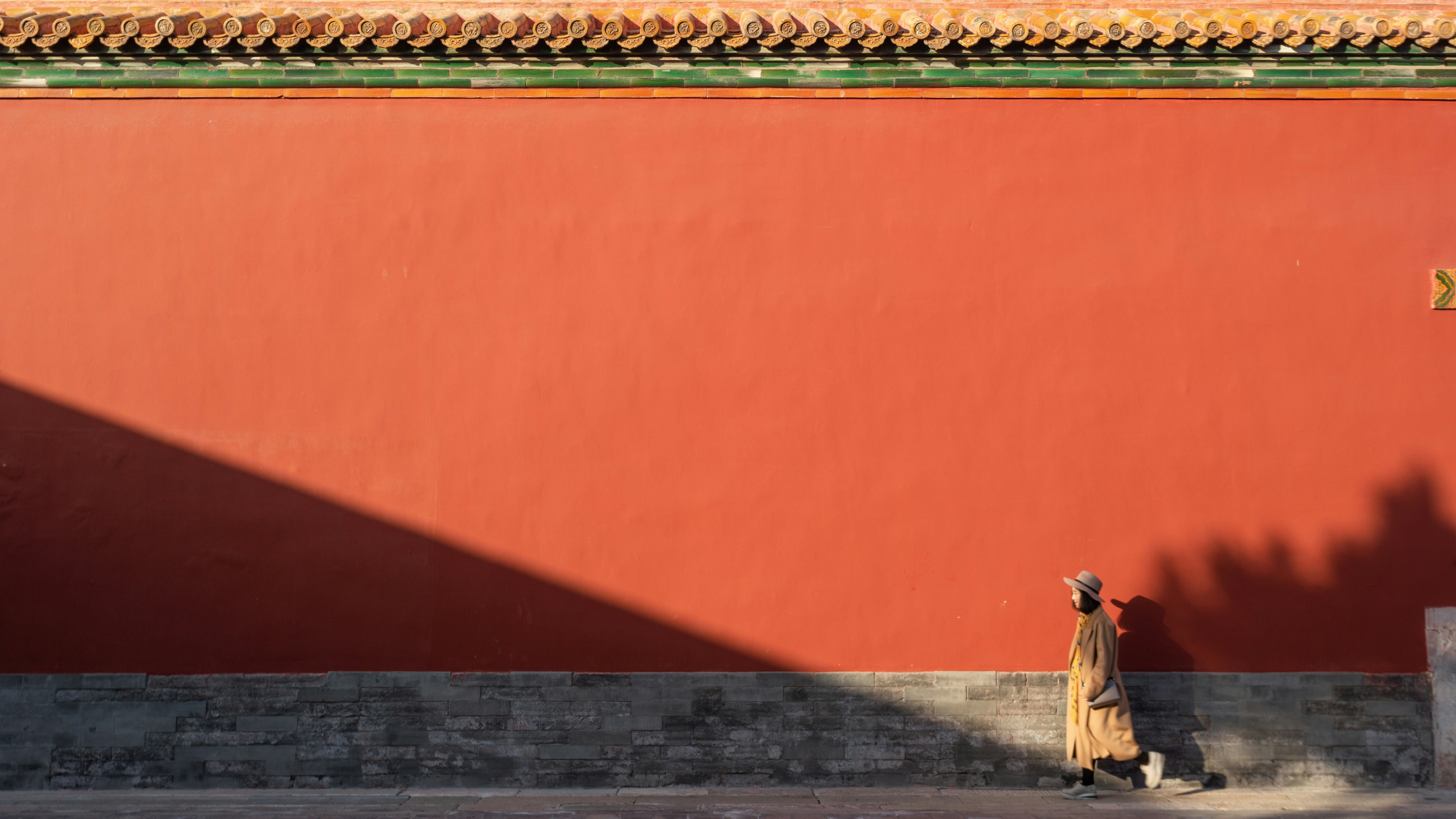
Returning to the Jiangsu province of China for summer vacation, I spotted a feminist bookshop that had just opened. Run by a woman from Beijing, it stocks over 70% female-authored books and hosts women-only events—from play readings to whiskey tastings—that are announced in a group containing more than 400 women and no men on the Chinese messaging platform WeChat. This is a typical example of how feminist activities are organised in China currently, with much attention devoted to building online networks that in turn sustain offline initiatives. Chinese feminists are perceived as scarce due to the stereotypically authoritative image of Chinese society, but they are by no means a rare species.
The precariousness of the current state of Chinese feminism is perhaps a result of the universal tension between solidarity and solitude exemplified by its own history. After state-enforced solidarity among women fails, the need for individual agency gives birth to political acts, with new, fragile forms of digital solidarity emerging from individual experiences of solitude. Such generational differences in the form and content of feminist activities is explained by Sara Liao in a 2020 article for the Asian Journal of Women’s Studies as being closely tied to ‘the liberation of the market, the proliferation of consumer culture, the embrace of all things feminine, and the convergence of state control and market capitalism’.
The history of state feminism in China has followed a trajectory of initial progress, regression, and a subsequent resurgence of feminist awakening prompted by social incidents in the 2020s. In the early 20th century, the official promotion of equality did not truly grant women substantive rights; rather, all citizens were treated as equal units of labour—everyone was a member of the proletariat class. The slogan ‘women hold up half the sky’ empowered Chinese women after 1949, with the All-China Women’s Federation (ACWF) positioned at the frontline of the dominant socialist feminist movement, successfully pushing forward laws including land reform and maternity leave as theorised by Yunyun Zhou in Women Studies International Forum (2023).
The one-child policy introduced in 1979 and abolished in 2015 also had a certain, albeit limited, positive impact on feminism in China. Without it, many girls might not have had access to quality education, as traditional preference to have a son could drive families to keep having children until a boy was born. In rural areas, where female infanticide often occured, families were permitted to have more than one child as long as the additional child was a girl. However, historical trends show that policies that appear to advance feminist goals do so only insofar as they align with the state’s economically driven agenda. In the 1980s, large numbers of workers were laid off from state-owned enterprises (xiagang). Off-duty women were much more vulnerable than men due to a lack of technical skills and social capital, argue Chan and Qiu in Communist and Post-Communist Studies (1999). With the transition toward a capitalist economy, the distribution of resources became increasingly unequal and gender issues resurfaced.
In 2021, with the decline in economic growth due to the COVID-19 pandemic, the ‘divorce cooling-off period’ was introduced in the revised Civil Code. It requires couples who apply for a divorce by mutual agreement to undergo a 30-day waiting period before their application can be finalised. During which, either party can withdraw the divorce application without the other’s consent. Presented as a strategy to combat an ageing society,which is perhaps a consequence of the one-child policy, and to revive a slowing economy, it prioritises increasing birth and marriage rates and consumption over women’s fundamental safety and autonomy, especially when considered alongside the much-criticised laws regarding domestic violence. The positive effects of certain state-enforced pronatalist laws were minimal, with little effective reinforcement of women’s rights when it comes to marriage and domestic abuse.
In January 2022, the video of a caged woman who appeared abused and had given birth to eight children spread across Chinese social media platforms. City and provincial governments issued ambiguous and at times self-contradictory responses, which intensified public outrage. This shows that human trafficking, forced marriage and domestic abuse, including in-marriage sexual assaults, in rural areas persisted despite governmental efforts in the early 2000s. Equally troubling was the government’s reflexive attempt to mitigate the situation by taking down the video from online platforms. The legal punishment for those involved in human trafficking and domestic abuse depended to a certain extent on the solidarity of Chinese feminists, that is, their online protests.
This episode demonstrated not only the persistence of structural violence against women but also the limits of formal institutions, forcing feminists to rely increasingly on digital networks where individual voices combine into collective dissent. However, such digital resistance was shaped by a paradoxical condition: every act of participation begins in solitude. Whether at home, in an office, or in an internet café, women write posts or comment alone, often in fear, before their voices merge into a collective outcry. In this sense, online solidarity is inseparable from solitude as it depends on the willingness of individuals to endure isolation in order to be heard.
It is the aforementioned conditional and often contradictory nature of state feminism that created the need for NGO activism in the late 1990s and 2000s. Despite this brief window of civic openness that allowed NGO-based feminists to develop, China’s intensified media control began around 2013–2014. During this time of Xi Jinping’s first term, state censorship of online platforms also expanded significantly. Before this period, many NGO-based feminists, often regarded as the first generation of the post-1995 feminist wave, were willing to collaborate with the government and utilise institutional resources. Their activism was directly influenced by the 1995 Fourth World Conference on Women held in Beijing, which created new spaces for gender discourse within official and semi-official structures including the Beijing Zhongze Legal Consulting Service Center.
In 2012, however, the Occupy Men’s Toilets campaign signalled a departure from NGO feminism’s government-aligned approach. The campaign demanded governmental accountability through street performance art, mobilising public media attention rather than professional or institutional channels that required substantial social capital. By physically occupying men’s bathrooms, participants protested against the shortage of public toilets for women. This form of activism, paired with the tightening of media and civic space after 2014, marked a turning point for Chinese feminism away from institution-based negotiation and towards decentralised, often digital, modes of resistance. New approaches to feminist campaigning reflect a need for feminism that serves all women in China, not only those who already have the capital and networks to engage with state institutions, but also working-class women who seek safety in both the workplace and domestic environments. In a context where offline demonstrations are virtually impossible and carry the risk of political and social marginalisation, many women now resist through online protest, boycott campaigns and consumer activism, utilising their collective power as the country’s largest group of consumers.
The start of online feminism was marked by a crucial event in 2020 when the Communist Youth League of China launched a pair of virtual anthropomorphic avatars – Jiangshan Jiao (‘Beautiful Rivers and Mountains’) and Hongqi Man (‘Waving Red Flag’), whose names are drawn from Mao Zedong’s poetry. Jiangshan Jiao was portrayed as the elder sister of Hongqi Man. The two virtual idols received widespread criticism from Chinese feminists, who viewed them as the personification of entertainment-oriented state propaganda. Many argued that the political authority of the Communist Youth League of China should not be conflated with celebrity culture, particularly at a time when the COVID-19 pandemic was at its peak and many female medics were working hard at the frontline. Yet, they did not gain adequate support from governmental institutes, such as inadequate provision of sanitary pads.
The comment section of the launch post of Jiangshan Jiao and Hongqi Man was hence flooded with satirical and critical questions to Jiangshan Jiao, including: ‘Jiangshan Jiao, do you menstruate?’, ‘Jiangshan Jiao, did your family get a second child because you are a girl?’, and ‘Jiangshan Jiao, do you earn the same wage as your brother?’ Each question encapsulates the discrimination and abuse Chinese women encounter in everyday life. As a result, the official account of the project was terminated. Meanwhile, countless online donations and discussions emerged regarding the working conditions and treatment of female medical workers during the pandemic. This incident also marks the start of an ongoing sanitary pad revolution in China, characterised by the boycott and reporting of low-quality sanitary pad producers and the gradual destigmatisation of menstruation.
Unlike the NGO-based feminism era, when activism often required institutional presence and professionalised networks, digital feminism has flourished in dispersed solitude. It is precisely because women are scattered, posting alone and risking censorship alone, that solidarity online becomes possible. It is a form of solidarity forged through shared solitude.
Douban—a platform often described as a mix of Goodreads, Letterboxd, and Discord—hosts some of the most active feminist and LGBTQ communities in China, despite periodic censorship and shutdowns. Its discussion-group function has enabled feminists to build female-centred spaces ranging from niche interests to professional networks, such as ‘Women in Tech’, ‘Women in Lit’, and ‘The Feminist Group’. Women have proven more influential online both in quantity and quality: even in male-dominated fields like gaming, the female gamer group has 47,751 members compared to just 814 of male counterparts. Women also appear to have greater purchasing power, as when it comes to platforms heavily shaped by capitalist force and consumerism such as Rednote, where most users are women.
Women are also more active in online discussions, which enables them to spread feminist messages and find like-minded people, but simultaneously it makes them more vulnerable to keyword bans and cyberbullying. Meanwhile, companies advertise women-oriented products by using the narrative of self-love, though such marketing strategy appears to be exploiting and indoctrinating women with idealistic images of the female body, such as luxury skincare product ads that imply an equation between self-care and people pleasing. Chinese feminists are in an awkward position, facing internal disagreements and external pressure from governmental policies, while wrestling with the seductive force of market capitalism.
What makes digital solidarity even more precarious is that the very same tools that enable online activism in the first place also feed into sensationalism, disinformation and antagonism. The ‘Grandpa Hong Incident’ which occurred in the summer of 2025 gained a lot of attention on the internet. A sensational headline which claimed that a 60-year-old cross-dresser went on dates with 1,600 men circulated with numerous videos and images of alleged sexual encounters. Police later confirmed that ‘Grandpa Hong’ was not 60 but a 38-year-old man named Jiao, and that the ‘1,600 dates’ claim was exaggerated. Jiao had portrayed a female persona online using filters and voice-changing software, claiming to offer free sexual service while secretly filming and selling the recordings. In the videos, Jiao would casually wear a wig and a dress, with poor makeup that clearly revealed he was not a biological woman. Yet, many men still engaged in sexual acts, seemingly pretending not to notice. Some self-identified radical feminist commentators interpreted the incident as evidence of the instability of heterosexual masculinity in China, suggesting that male desire is often directed toward other men, whether physically or psychologically. Others criticised the initial nickname of Jiao as ‘Sister Hong’, arguing that a female designation was misogynistic and inappropriate for a biological male. Instead of fostering solidarity, online discourse spiralled into sensationalism, with unnecessary attention paid to the identities of Jiao’s sexual partners, antagonism toward men, including gay men, and disagreement over what exactly was being resisted.While the incident itself reflected individual misconduct, the ensuing discourse revealed deeper anxieties about masculinity, gender identity, and authenticity in digital culture.
The radicals’ homophobic and emasculating rhetoric towards men reflects a belief that women cannot form genuine friendships or romantic relationships with men, as men’s ‘essential’ orientation is assumed to be toward other men. While this perspective diverges from mainstream global feminism, it is not surprising considering the context. In contrast to Western feminists, who are more likely to find unity with other left-wing causes, including LGBTQ rights and environmentalism, Chinese feminists often disagree on such issues. Some online factions often described as ‘radical feminists’ may see others as mere intellectuals who fail to practice what they preach, and thus regard themselves as the only ‘true’ feminists in solitude. Meanwhile, other feminists feel an even deeper solitude, believing themselves to be bad feminists for not conforming to the movement’s ideological expectations. This divergence results in a loose network: within large groups, not only does geographical distance create physical isolation, but the emotional distance between individuals intensifies the feeling of fighting a solitary battle.
The trajectory of Chinese feminism illustrates a microcosm of the global struggle between solidarity and solitude when activism is faced with both external pressure and internal conflict. Feminism, however, cannot be reduced to a battle between binary genders as opposing forces. Radicalism may have served as a necessary catalyst for change, but its influence is not harmless. Building solidarity between straight feminists, lesbians, and other sexual minorities across class divisions requires recognizing patriarchy as the common oppressor, one that privileges a few while also exploiting women, lower-class men and men who are sexual minorities through a hierarchical system that exerts control over gender, power, culture and the economy. Whether expressed through offline protests or screens, Chinese feminism continues to negotiate the fragile balance between solitude and solidarity, a balance that defines the politics of resistance in the twenty-first century.
Aijia He is a second-year Psychology and Philosophy (PPL) student at Brasenose College, Oxford. Her academic interests range from ethics to cognitive science.