
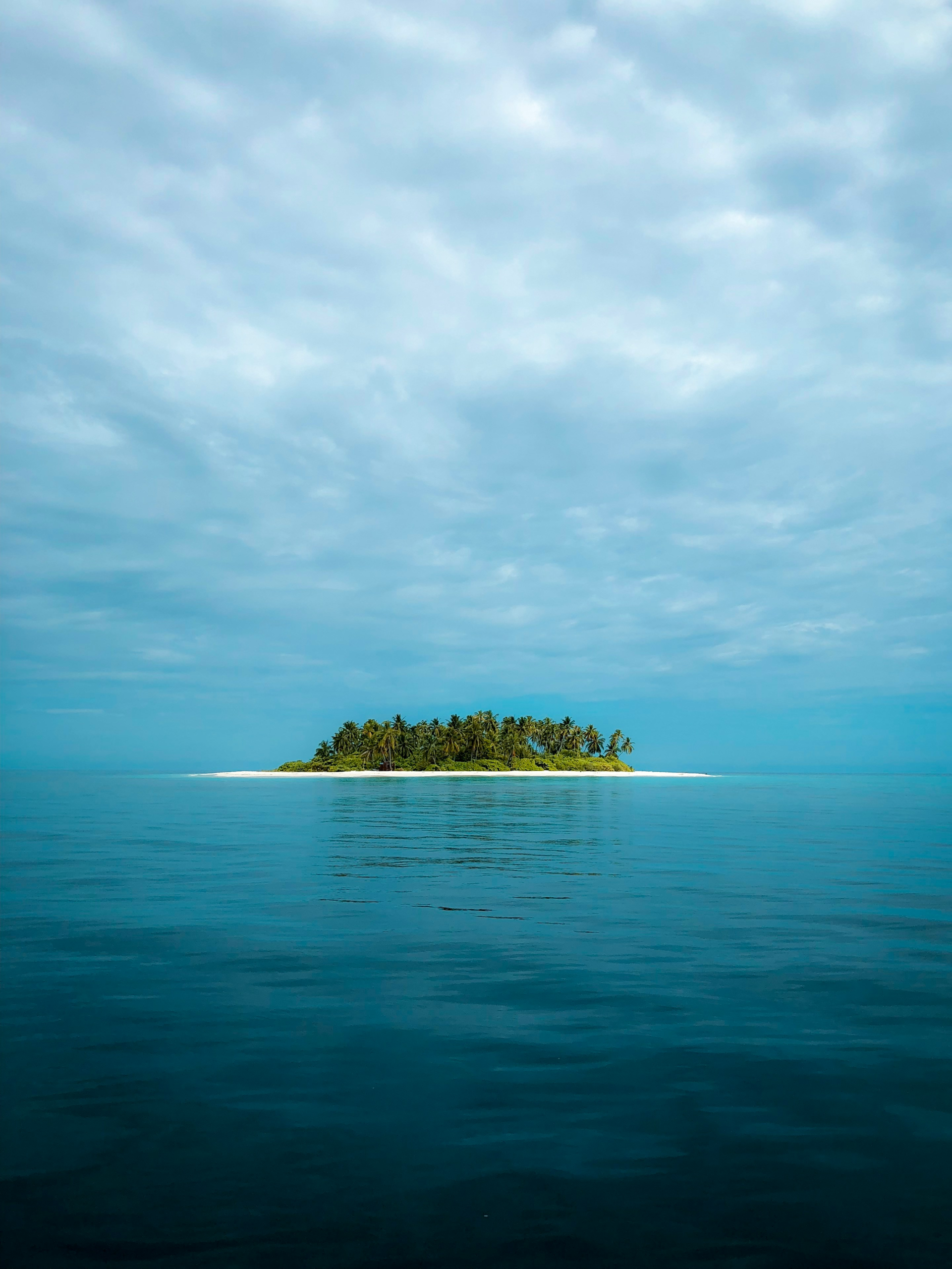
When Simon Kofe, Tuvalu’s foreign minister, addressed the 2021 United Nations (UN) Climate Conference in Glasgow, he stood knee-deep in the sea, his lectern planted in saltwater. The image quickly circulated across the world: a man in a suit, delivering the language of diplomacy in a setting that made words seem almost absurd. Tuvalu, a Pacific nation of barely 11,000 people, is disappearing. Its atolls are projected to become uninhabitable within decades; its government is already experimenting with the idea of a digital nation project.
Just as Kofe’s address was unprecedented in its theatricality, Tuvalu faces a possible future of a kind that the international community has not before seen. A country, warning that it may lose not just homes, but the physical basis of statehood itself. This is not the familiar story of migration or displacement, in which people leave one place and settle in another. The UN was confronted with a more radical question: what becomes of a nation when its land is gone?
Sovereignty Without Soil
Territory has long been treated as the bedrock of political life. The state, as imagined in the twentieth century, was inseparable from the soil it governed. Borders were drawn, maps filled, populations registered. Sovereignty meant control over a bounded piece of earth. Without this foundation, international law falters.
Tuvalu’s predicament forces this assumption into question. If the islands disappear beneath the sea, the government may still convene in exile, its citizens may still exist, its flag may still fly at the UN. But is this continuity a matter of fact, or of courtesy extended by others? International law has no clear precedent for a deterritorialised state. The Montevideo Convention of 1933 defined the modern state by four criteria: a permanent population, a defined territory, a government, and the capacity to engage in relations with others. Tuvalu satisfies all four — for now. But as the sea advances, one of those criteria begins to dissolve.
Political thinkers have wrestled with such dilemmas before. Hannah Arendt, reflecting on the plight of stateless refugees in the 1940s, argued that the greatest deprivation was not the loss of home but the loss of ‘the right to have rights’. Without a recognised state, individuals were left exposed, their claims reduced to humanitarian appeals. Tuvalu’s warning carries echoes of that anxiety: a fear that without land, its people may still exist, but only as supplicants rather than citizens.
And yet, nations have endured without territory. The Polish government operated from London during the Second World War. The Tibetan diaspora sustains a parliament-in-exile in Dharamsala. Palestinians live under occupation yet claim statehood in international forums. Armenians preserved national identity through centuries of diaspora before the creation of the republic in 1918. These examples differ from Tuvalu’s plight, yet they converge on a lesson: political communities can endure without land, but their endurance depends on recognition from others. History shows that when recognition falters, nations-in-exile unravel. The Polish government-in-exile survived the war years only so long as the Allies treated it as legitimate; when recognition shifted to the Soviet-backed regime in 1945, it vanished almost overnight. Tibet’s government-in-exile has watched its standing erode as states quietly withdrew support under Chinese pressure. By contrast, the Palestinians’ continued — if contested — recognition at the United Nations has preserved their political claim even in the absence of territorial control. In every case, survival has hinged less on sovereignty than on solidarity.
That recognition is precarious. To exist without territory is to live in solitude, cut off from the anchors of land and sovereignty, sustained only by the solidarity of others. Tuvalu’s survival as a political entity will not be guaranteed by legal doctrine alone but by whether other states and organisations choose to recognise it once its islands are gone.
Solidarity and Its Limits
In the grand halls of climate negotiations, Tuvalu’s representatives often punch above their weight. The Alliance of Small Island States (AOSIS), of which Tuvalu is a member, has become a moral compass within the United Nations climate process. For decades, it has pressed wealthier nations to commit to binding emissions reductions, to acknowledge the principle of ‘common but differentiated responsibilities’, and to establish a mechanism for compensating those most vulnerable to climate impacts.
This collective strategy exemplifies solidarity in practice. Individually, Tuvalu or Kiribati could not command attention from the largest emitters. Together, the islands have carved out space for their demands, shaping the diplomatic vocabulary of climate justice. The establishment of a loss and damage fund at COP27 was in no small part the result of sustained pressure from AOSIS and its allies. It signalled a recognition that solidarity requires more than sympathy — it requires redistribution across borders and generations.
Yet solidarity has proven fragile. Financial commitments remain vague, timelines stretched, and the flow of resources uncertain. For Tuvalu, these delays are not technicalities; they are existential. Each year of hesitation means further salinisation of farmland, more coastal erosion, more displacement. The solidarity extended in communiqués and plenary sessions often dissolves once negotiators return home.
The limits of solidarity are not confined to climate diplomacy. Small states occupy an ambivalent position in global politics more broadly. On the one hand, their votes in international organisations carry the same formal weight as those of larger powers, giving them symbolic equality. On the other hand, their dependence on aid, remittances, and external security guarantees renders them vulnerable. Their visibility is heightened, but their autonomy constrained. Tuvalu’s solitude lies in this contradiction: it is spoken of often, yet its capacity to shape outcomes remains sharply limited.
This imbalance raises broader questions about justice in an interdependent world. Climate change has laid bare the asymmetry between those who caused the crisis and those who suffer its earliest consequences. Tuvalu emits a negligible fraction of global greenhouse gases, yet faces erasure. Solidarity, in this context, is not merely an ethical aspiration but a test of whether the international order can accommodate claims that are moral rather than material.
But eliciting solidarity also has its costs. To frame itself as a victim of climate change, Tuvalu must repeatedly perform its vulnerability — through speeches, images, and symbolic gestures. The seawater address was one such performance. These acts succeed in capturing attention, but they risk reducing Tuvalu to a symbol rather than a subject, a case study rather than a community. The solitude of small states lies partly in this paradox: they are at once hyper-visible and profoundly marginal, their identities shaped as much by the gaze of others as by their own agency.
The Future of Belonging
Tuvalu’s situation may be unprecedented in its environmental cause, but the phenomenon of a landless nation is not new. History is littered with examples of communities who endured despite dispossession. The Armenians preserved a national identity through centuries of statelessness before the founding of the republic in 1918. The Palestinians sustain political institutions and international claims despite decades of displacement and occupation. Tibetans maintain a government-in-exile, teaching language and culture to generations born far from the plateau. These cases differ, but they converge on a lesson: land can be lost, yet political belonging can persist — if others recognise and sustain it.
Recognition, however, is rarely unconditional. Stateless peoples have often lived at the mercy of host states or allies, their futures contingent on shifting geopolitical winds. Arendt’s description of the refugee as the person who has lost ‘the right to have rights’ remains a warning. To be without territory is to be dependent on the solidarity of others — a solidarity that may falter.
Tuvalu’s proposal for a digital nation reflects both anxiety and an aspiration. It is an anxiety that the islands themselves may vanish, leaving nothing but memory. But it is also an aspiration to redefine sovereignty as more than soil. Archiving land records, preserving oral histories, and recreating landscapes in virtual form are not only technical exercises; they are claims to continuity. They insist that a nation is not reducible to physical geography, that culture, memory, and political will can together sustain belonging.
Philosophers of nationalism have long suggested as much. Benedict Anderson’s Imagined Communities argued that nations are sustained by shared narratives rather than natural boundaries. If this is true, then perhaps Tuvalu’s future — like that of Armenians, Palestinians, or Tibetans — depends less on the ground beneath its feet than on the recognition accorded to its imagination of itself. Solidarity here means not only financial transfers or climate commitments but the willingness of other states to affirm that Tuvalu remains a nation, even if its territory is gone.
What happens to a country when the land is gone? The answer cannot be found in treaties alone, nor in digital archives. It lies in whether the world is willing to acknowledge that political belonging is sustained by recognition as much as by geography. Tuvalu is not the only state at risk, merely the first to pose the question so starkly. In an age of rising seas and shifting borders, its solitude is both a warning and an appeal. The test for international solidarity will not be whether Tuvalu is mourned once it disappears, but whether it is affirmed as a country even when the land is gone.